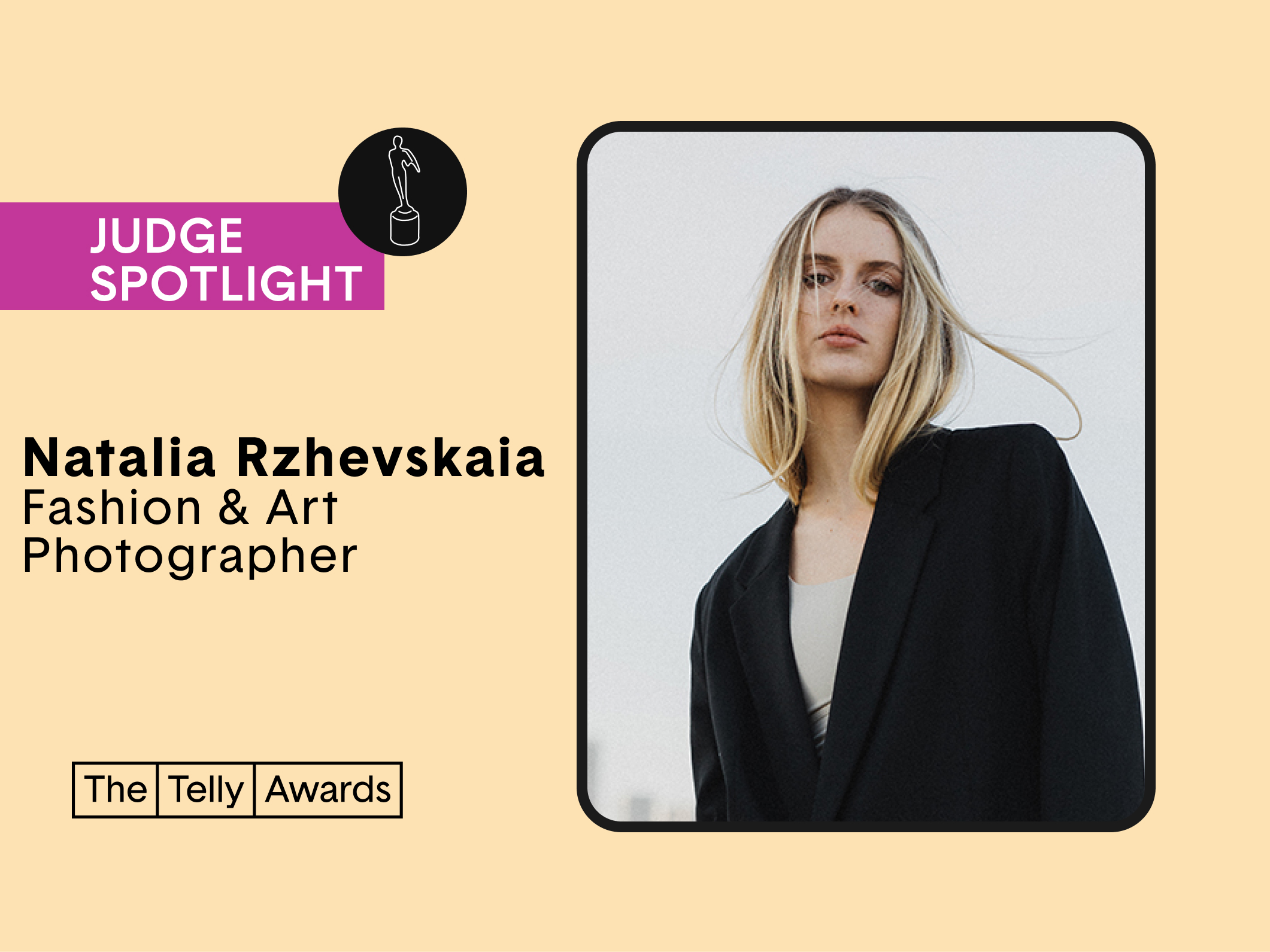
Natalia Rzhevskaia is a California-based fashion and art photographer known for her cinematic style and emotionally expressive visual storytelling. Her work has been featured in leading international publications, including Basic, MALVIE, and Glamour Bulgaria, and she has collaborated with brands such as Westholm, PatPatNoodles, and Basic Magazine.
How many years have you been a judge?
This is my first year!
What excited you about judging for the Telly Awards?
I’m excited to judge for the Telly Awards because it’s a chance to celebrate creative excellence and discover inspiring visual stories from around the world. I’m passionate about recognizing work that pushes artistic boundaries and reflects the evolving language of visual media.
What was your first job in the industry? What did it teach you?
My first job in the industry was assisting on fashion editorial shoots in Los Angeles. It taught me the importance of collaboration, attention to detail, and how every small element contributes to the final image. That experience shaped my understanding of professionalism on set and the value of creative teamwork.
What project are you most proud to have worked on?
One of the projects I’m most proud of is a fashion editorial I created with fashion influencer Anna Casey, shot on the sand dunes. The series was later published in Glamour Bulgaria and led to our participation in New York Fashion Week. It was an unforgettable experience that showed how collaboration and creativity can open new opportunities in the fashion industry.
What’s the most challenging part about your job and/or the industry?
One of the most challenging parts of my job is maintaining authenticity and artistic vision in a fast-paced, trend-driven industry. It can be difficult to balance creative expression with commercial demands, but I see it as an opportunity to find harmony between art and purpose.
What do you look for to determine excellence in video?
I look for strong visual storytelling, emotional authenticity, and a clear creative vision. Technical quality is important, but what truly stands out is when every element lighting, composition, pacing, and sound works together to create a memorable and meaningful experience.
What are your current roles and responsibilities and what do you love most about your job?
I work as a fashion and art photographer, creating editorial and commercial imagery for brands and magazines. My role involves developing concepts, directing shoots, and translating ideas into visually striking stories. What I love most is the creative freedom the ability to express emotion, style, and atmosphere through images that connect with people on a deeper level.
What initiatives or projects are you working on now that excite you?
I’m currently working on a series of fashion editorials that explore the intersection of nostalgia and modern aesthetics. These projects allow me to combine cinematic storytelling with expressive styling and emotional depth. I’m also developing collaborations with emerging designers in Los Angeles, which is always inspiring and creatively fulfilling.
Do you have any specific practices you lean on to spark creativity?
I’m most inspired by the beauty of vintage film aesthetics and the thrill of the unexpected. I love to combine contrasts – things that shouldn’t normally go together – like a model in an inflatable pool in the middle of a busy street or a modern reinterpretation of Twiggy. That balance between nostalgia and bold creativity is where my imagination truly comes alive.
What inspired you to pursue your career path?
I was inspired by the desire to surprise people and make them stop for a moment to really look at a photograph. I love when each viewer finds their own meaning or emotion in my work — that personal connection is what makes photography so powerful to me.
In your experience, what is a significant change you are seeing happen in the video, television, and/or film industry, and what insight can you share about how to navigate it?
I believe it’s important to always experiment and explore different formats. If one approach stops working, another will – creativity is about movement and evolution. The key is to stay open-minded, flexible, and fearless in trying new ideas while continuing to grow as an artist.