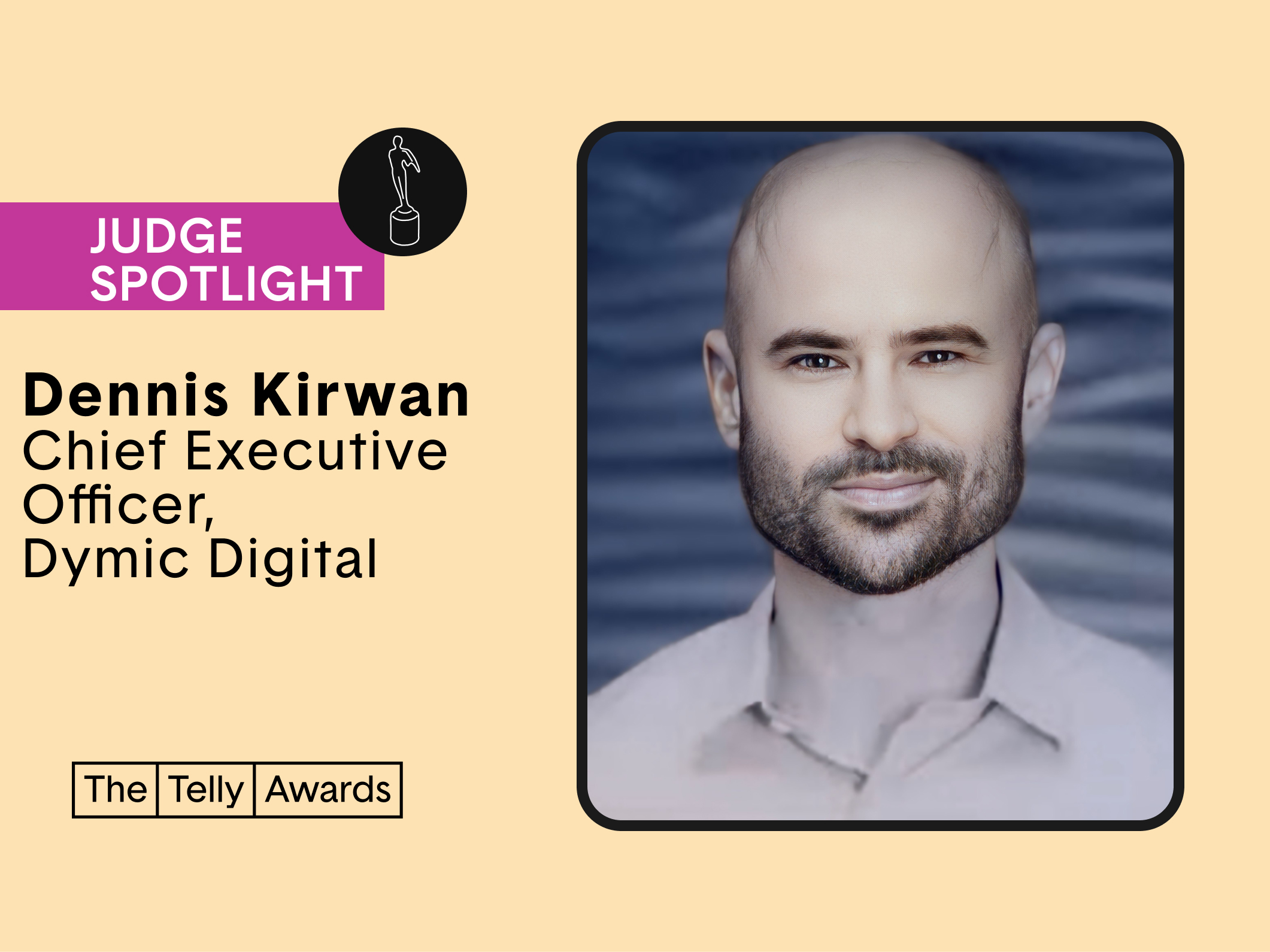
Dennis Kirwan is the CEO of Dymic Digital (dymic.com), where he helps brands build authority and performance across video, social, and modern digital marketing. With a background in venture growth and marketing execution, he aligns teams to deliver creative that earns trust and drives demand. A member of the Forbes Agency Council, Dennis writes on shifting discovery behaviors—where AI assistants and emerging platforms increasingly shape what audiences see, trust, and recommend. As a judge, he values bold ideas, disciplined execution, and storytelling that holds up wherever it’s viewed.
How many years have you been a judge?
This is my first year!
What excited you about judging for the Telly Awards?
Video is now the front door to brand trust—often before someone ever visits a website or reads a pitch deck. What excites me about the Telly Awards is that it celebrates storytelling across every screen, from cinematic work to social-first formats, and it rewards the teams who understand both craft and context. I’m especially interested in work that earns attention quickly, makes a clear point, and leaves a lasting impression—because that’s exactly what modern audiences demand.
What was your first job in the industry? What did it teach you?
Before entering the marketing industry in 2010, I worked in venture capital. That experience taught me that success relies on differentiation and execution. At the Inc. 500 agency where I learned the mechanics of SEO, I realized that marketing requires that same discipline. A compelling narrative is essential, but the system behind it must be bulletproof. The bottom line is, you don’t hope for growth—you engineer it.
What project are you most proud to have worked on?
I’m proudest of projects that make the audience feel something real. Watching people pause, lean in, and then act is still the best outcome. That’s what makes the work worth doing.
What’s the most challenging part about your job and/or the industry?
The hardest part is how quickly the environment changes—platforms evolve, attention fragments, and AI accelerates everything. It’s easy to use AI to scale output instead of meaning, and brands can dilute their voice without realizing it. The advantage comes from fundamentals: a sharp point of view, a credible story, and craft that respects the audience.
What do you look for to determine excellence in video?
I look for three things: a strong idea, disciplined execution, and a clear effect on the viewer. The best pieces establish a point of view early, build momentum with tight pacing, and land a message that’s memorable without being heavy-handed. Then craft seals it—editing, sound, visuals, performance, and design working in service of the story. Ultimately, excellence is when the work feels inevitable: nothing extra, nothing missing, and it holds up whether you’re watching on a phone or a big screen.
What are your current roles and responsibilities and what do you love most about your job?
As CEO of Dymic Digital, I’m responsible for helping our clients stand out—and ensuring their message reaches the right audience with precision. I partner with teams to define what a brand stands for, who it’s for, and how to tell that story with impact across video, social, and digital channels. I love the range of organizations we work with—from international schools in Japan to defense training in New Zealand, and U.S. practices spanning doctors to law firms. Different industries, same truth: a differentiator you can feel, backed by a powerful narrative, is what makes the audience stop scrolling and start listening.
What initiatives or projects are you working on now that excite you?
I’m focused on “first-impression” creative—because today you rarely get a second shot. Audiences decide fast, attention is split across screens, and AI-driven discovery increasingly influences what gets surfaced and recommended—often rewarding content that’s clear and credible. We’re tightening the message, sharpening the hook, and making the brand unmistakable.
Do you have any specific practices you lean on to spark creativity?
I always come back to three questions: Why this brand? Why now? And how do we make the audience feel it fast? From there, we build an opening that earns attention, a narrative that carries it, and an edit that respects the pace of modern viewing.
What inspired you to pursue your career path?
I’ve always been fascinated by how people decide—how a single story can change what they believe, and what they do next. I love helping brands move from “we do a lot” to “here’s why we matter,” and then building a story strong enough to carry that value into the market.
In your experience, what is a significant change you are seeing happen in the video, television, and/or film industry, and what insight can you share about how to navigate it?
Discovery is an elevator pitch at 1.5x speed. Viewers are scrolling, recommendations are driving what gets seen, and AI-driven systems are becoming a bigger gatekeeper of visibility. If your premise isn’t clear immediately, you never get to the good part. Win it with a sharp opening, a strong narrative spine, and edits tailored to each screen.