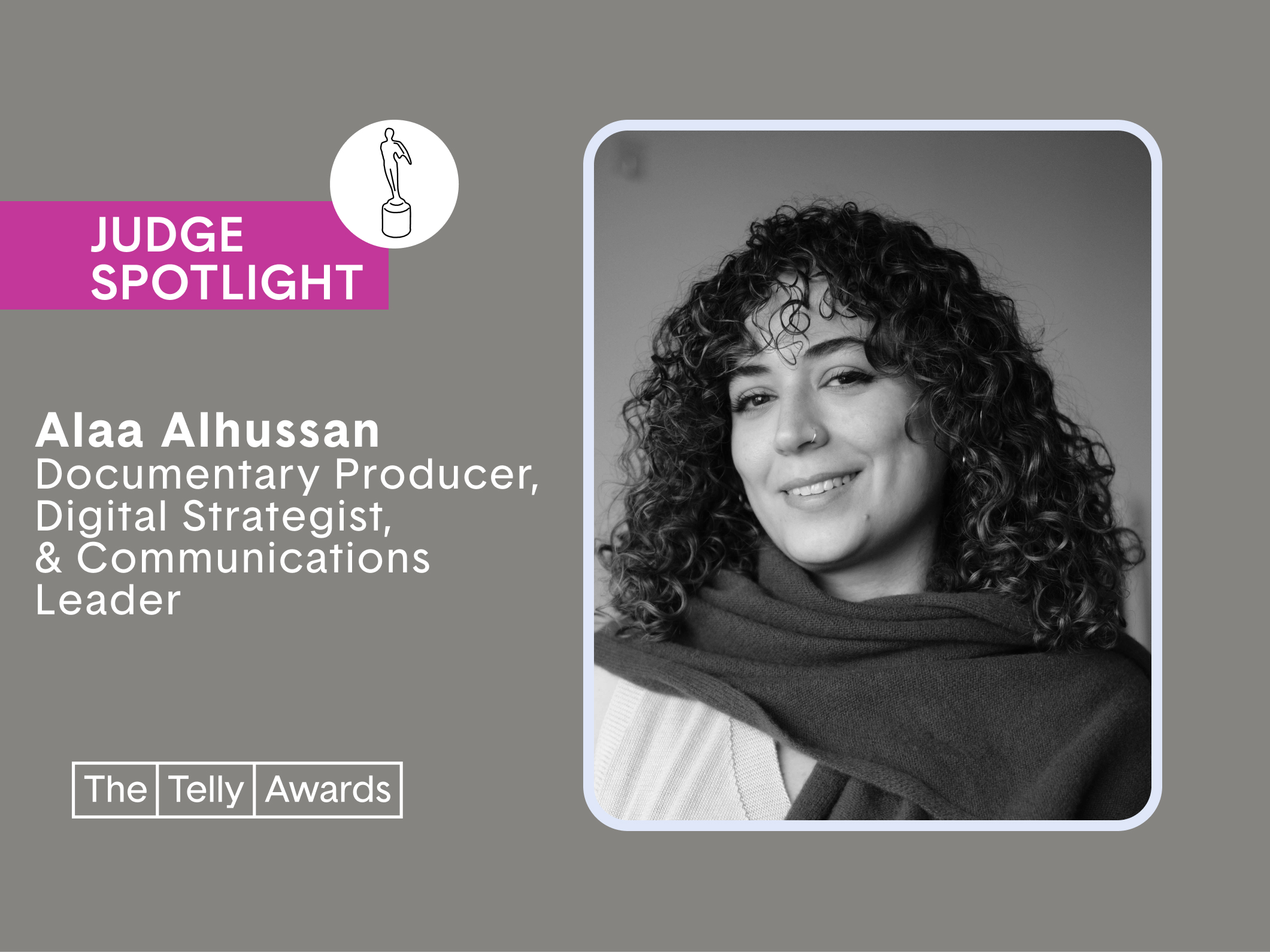
Alaa Alhussan is an award-winning documentary producer, digital strategist, and communications leader with 10+ years of experience across media, advertising, and youth storytelling. She produced 30+ acclaimed films for Al Jazeera English and led the launch of Zync under MBN/USAGM, achieving 1.4M+ IG views within four months. Combining expertise in photography, filmmaking, and advertising with strong management and communication skills, she builds impactful, culturally resonant content that connects global audiences.
How many years have you been a judge?
This is my first year!
What excited you about judging for the Telly Awards?
What excites me most is being part of a community that truly celebrates craft. I’ve spent years producing and developing documentary and digital storytelling for global audiences, and the Telly Awards have always represented that sweet spot between creativity, purpose, and innovation. I’m excited to discover new voices and formats that push visual storytelling forward, especially from creators working outside traditional industry centers.
What was your first job in the industry? What did it teach you?
My first job was as a producer at a commercial agency (Y&R/Wunderman), creating ads for brands like Orange and IKEA. It taught me discipline and precision, how to deliver under pressure and translate abstract ideas into visuals that communicate instantly. That experience grounded me in structure, which later helped me take bigger creative risks in documentary and digital media.
What’s the most challenging part about your job and/or the industry?
The most challenging part is balancing creative ambition with platform algorithms and production realities. Audiences today have shorter attention spans but higher expectations for depth. The challenge, and the opportunity, is to craft work that’s both emotionally engaging and digitally native, without diluting substance. I’ve learned to see those constraints as creative boundaries rather than limitations.
What do you look for to determine excellence in video?
Excellence, to me, is when form and feeling align. I look for work that has a clear voice, emotional honesty, and strong editorial direction, where every frame, cut, and sound choice serves the story. Technical perfection matters, but authenticity and conceptual strength are what make something truly stand out. I always ask myself: Did this piece move me, surprise me, or shift how I see something?
What are your current roles and responsibilities and what do you love most about your job?
I’m currently developing a new factual-entertainment show with Al Araby TV called “America Outside the Box.” It’s a documentary-meets-satire series exploring the contradictions and subcultures of American life through a global lens. My role bridges editorial strategy, creative development, and production planning. What I love most is shaping a concept from an idea into something that feels alive, something that connects with audiences across cultures and generations.
Do you have any specific practices you lean on to spark creativity?
Yes. I step away. I take long walks, binge watch a show, shoot photos on film, or revisit documentaries that shaped me. I also find a lot of creative energy in conversations, especially with younger producers or non-media people. They help me see the world differently. Creativity, for me, starts with curiosity and returns to empathy.
What inspired you to pursue your career path?
I grew up fascinated by how media shapes perception, how stories can shift narratives about identity, culture, and belonging. That curiosity led me into documentary filmmaking, where I could merge artistry with truth-telling. Over time, I realized my passion is not only in making films but also in building platforms that give others a voice, like Zync, the Gen Z storytelling platform I helped launch. It’s all part of the same mission: connecting people through stories that matter.
In your experience, what is a significant change you are seeing happen in the video, television, and/or film industry, and what insight can you share about how to navigate it?
The biggest shift is the collapse of boundaries, between formats, audiences, and even professions. Documentary now borrows from comedy and TikTok pacing; television adopts cinematic language; creators are their own distributors. My insight: embrace hybridity. Don’t chase trends, understand why they resonate, and use that insight to tell timeless stories in new ways. The industry belongs to those who can merge substance with speed.