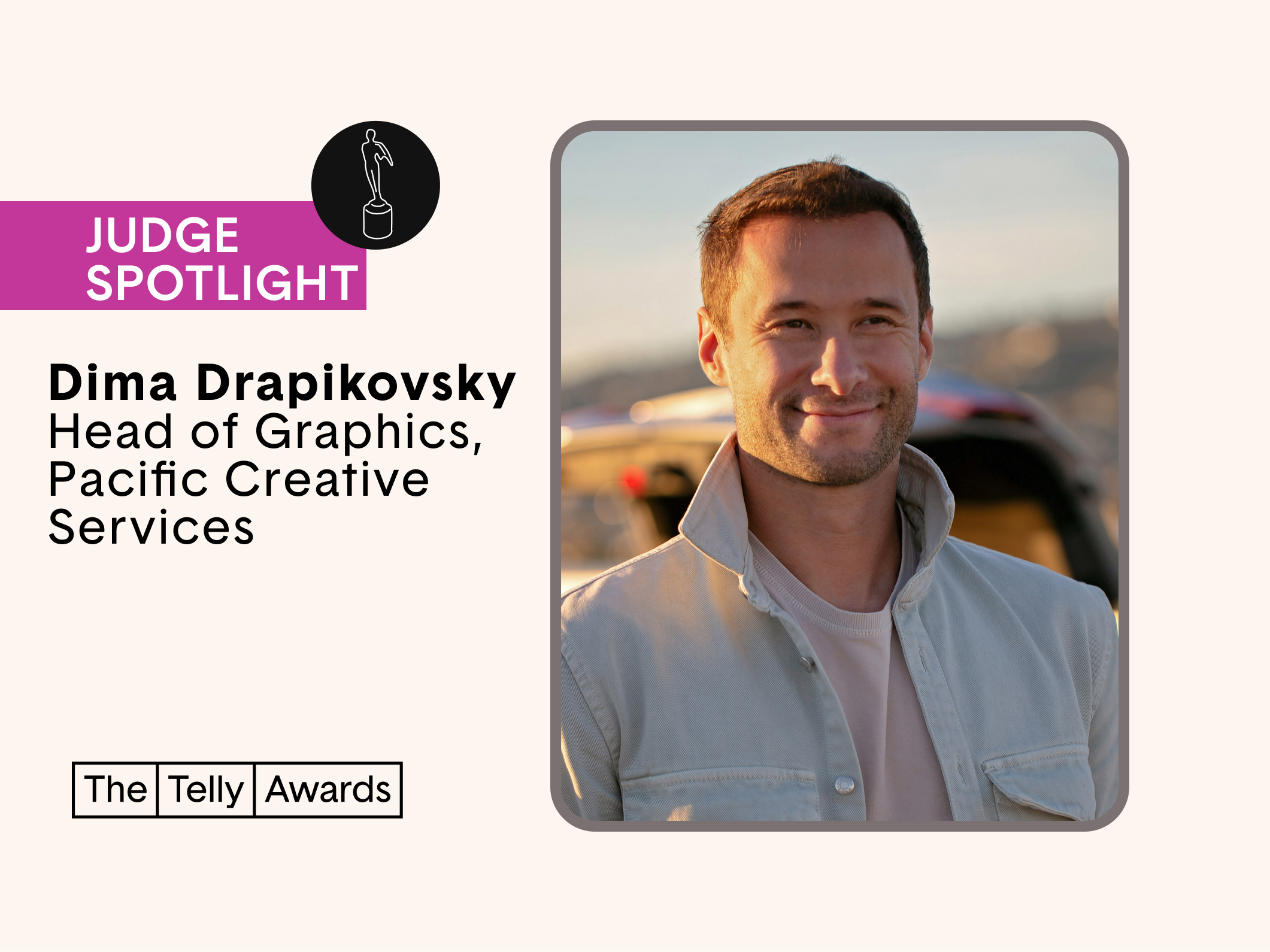
Born and raised in Ukraine, I grew up in the fast-paced world of esports and live entertainment. A former CG Leader for brands like WePlay and Starladder, I was shaped by years of creative pressure and big shows. With a shelf full of shiny awards for outstanding design, I like to think of myself as a seasoned Head of CG who still enjoys getting his hands dirty in pixels.
How many years have you been a judge?
This is my second year!
What excited you about judging for the Telly Awards?
What excites me most about judging the Telly Awards is seeing how creativity evolves under real production pressure. Each year I discover new ways studios and independent creators translate big ideas into clear, emotionally charged visuals. It’s inspiring to witness how technology and storytelling merge, especially when a team finds that perfect balance between craft, innovation, and purpose. It reminds me why we do what we do.
What was your first job in the industry? What did it teach you?
My first job in the industry was as a motion designer on contract with the legendary esports team Natus Vincere. It taught me that when you truly enjoy what you do, there are no limits.
What project are you most proud to have worked on?
I’m most proud of the Dota 2 Majors I’ve worked on – including the Boston Major, Kyiv Major, and AniMajor. These productions were not only creative milestones but also some of the most-watched esports events of their time, blending design, broadcast, and storytelling on a global stage.
What’s the most challenging part about your job and/or the industry?
The most challenging part is keeping creativity alive within fast-moving, high-pressure productions. In this industry, technology evolves faster than workflows, and expectations are sky-high. Balancing innovation with reliability – making something new while making sure it works live – is the constant test. But that’s also what keeps it exciting.
What do you look for to determine excellence in video?
I look for clarity of purpose and emotional precision, when every creative choice serves the story. Excellence in video is never about scale or budget, it’s about intention. Strong direction, cohesive design, and rhythm that connects with the viewer on a deeper level. When craft and concept align seamlessly, you can feel it instantly, that’s what defines true excellence.
What are your current roles and responsibilities and what do you love most about your job?
Currently I lead creative direction and design management across CG, motion, and real-time graphics projects. My role connects art and technology, from developing visual language to delivering it live. What I love most is seeing ideas grow through collaboration, when a team’s talent turns a concept into a stunning show.
What initiatives or projects are you working on now that excite you?
Right now I’ve started my own family-run creative studio, where we’re exploring new ways to bring motion design to life through Blender and Unreal Engine. What was once considered secondary in broadcast design is quickly becoming essential, and that shift truly excites me. I want us to become outstanding in this craft.
Do you have any specific practices you lean on to spark creativity?
I often step away from the screen and look for rhythm in everyday life. In music, light, or motion around me. I also love experimenting with new tools, where one small tweak can open an entirely new visual idea. Most of all, I lean on collaboration; nothing sparks creativity like sharing energy with talented people.
What inspired you to pursue your career path?
I was inspired by the mix of art, technology, and live emotion. Seeing how design can shape the atmosphere of a show and how visuals can amplify what people feel in real time made me want to be part of that magic. I chose this path because it connects creativity with impact, and every project still gives me that same spark.
In your experience, what is a significant change you are seeing happen in the video, television, and/or film industry, and what insight can you share about how to navigate it?
A major change I see is the rise of real-time and interactive content. The audience is no longer just watching, they are becoming active participants in the story. With tools like Unreal Engine, virtual production, and AI-driven workflows, creators can now shape experiences that react to viewers in real time. To navigate this shift, filmmakers and studios should focus on engagement, adaptability, and authentic storytelling.