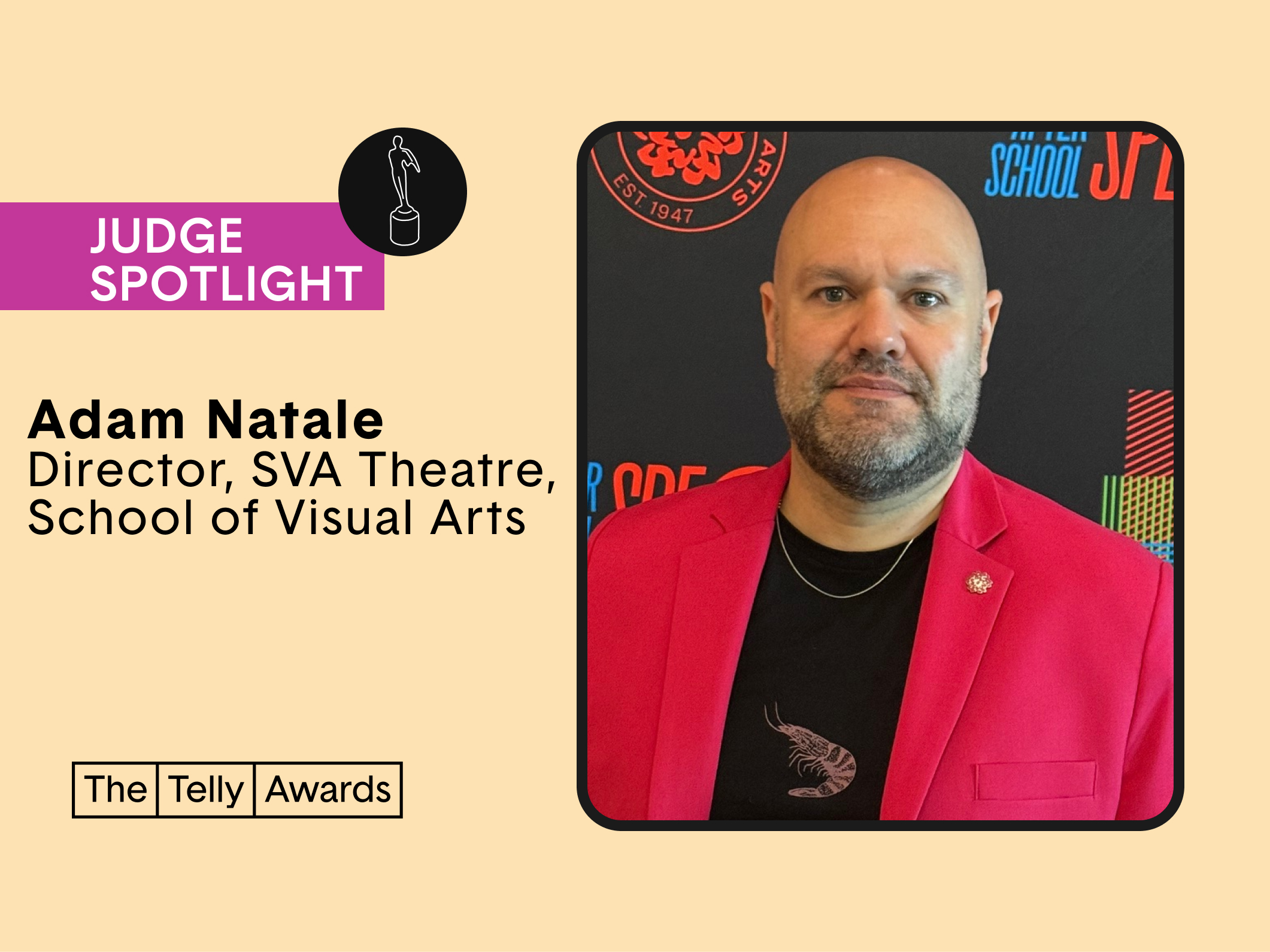
Adam Natale has been at the helm of the School of Visual Arts’ SVA Theatre since late 2012 and has worked with the majority of Hollywood’s major film and animation studios and many of New York’s top film and arts festivals. He founded and annually produces SVA’s alumni film festival, After School Special, and curates the College’s annual “best of” student thesis film screening. He serves on the board of NewFest (NYC’s LGBTQ+ film and media organization) and has been a guest speaker at SXSW, Sundance Film Festival, Americans for the Arts, Theatre Communications Group, and the National Performing Arts Convention, among many other events. Previously, Adam worked for the national arts nonprofit Fractured Atlas, the National Endowment for the Arts, and the New York Musical Theatre Festival, and served on the board of Red Bull Theater. He is a former chair of Americans for the Arts’ Emerging Leader Council, was awarded the American Express Emerging Leader Award, and holds degrees from American University and Goddard College.
How many years have you been a judge?
This is my first year!
What excited you about judging for the Telly Awards?
I’ve been on juries for a wide range of film and theatre programs, but this is the first that focuses on television and branded content — I’m excited to see a broad spectrum of work from a variety of artists and creators.
What was your first job in the industry? What did it teach you?
My first full-time job was at the National Endowment for the Arts, the federal funder of art across all disciplines that’s being created in the U.S. It really showed me the breadth, depth, and scope of the arts in the country. Whether it was a big, well-known film festival like Sundance, or a small, community space in a tiny, rural town that hosts screenings or performing arts events, I got to familiarize myself with all these spaces, artistic leaders, and many of the artists who created work for those spaces. It was invaluable, and taught me the importance of access to the arts.
What project are you most proud to have worked on?
As I mentioned earlier, I founded the alumni film festival at SVA, and we just passed our 11th year. It’s built this really nice, community/niche following and I see the same people coming back year after year. It’s so nice to connect with new alumni every year — some just starting out, some mid-career, and some whose names are very recognizable. We make everyone feel welcome, and it’s really special to form a connection with these filmmakers and artists. I’ve formed close bonds with many of them, and consider several of them good friends.
What’s the most challenging part about your job and/or the industry?
There’s such a holdover of processes and procedures in terms of how Hollywood does business, and very few people in the industry seem poised to break from the things that make life (and work) difficult. I don’t need to go into specifics — if you’ve worked in the industry, you know of at least one example.
What are your current roles and responsibilities and what do you love most about your job?
I oversee both the business and larger curatorial vision for SVA Theatre. I’m booking events that want to rent our venue, while also finding partners to work with to curate new programs and events for the college and the community at large. I curate an annual alumni film festival for the college which I take a lot of pride in. It’s always great to connect with alumni, see what they’re working on, and lift them up and show off that work. It’s special for them to be back at their alma mater seeing their work on the big screen, and getting to talk to students who want to follow in their footsteps. Everyone who participates in that event — whether as a guest speaker or an audience member — tends to leave with a sense of joy, and that’s really exciting to see.
What do you for to determine excellence in video?
It’s all about the story — whether your video is five seconds, five minutes, or five hours, if it doesn’t tell a convincing, interesting story in that time, it’s not going to cut it. And for longer works, if that story doesn’t grab you within the first few minutes, it’s not going to hold anyone’s attention.
Do you have any specific practices you lean on to spark creativity?
I always encourage cross-pollinating between artists or arts organizations, and therefore think partnerships are ideal for creating the best art and artistic programs. It opens your mind up to other ideas, and allows you to explore beyond your predictable box. I love asking, “What don’t I know that I don’t know?,” as it relates to whatever their art or business is — and I always get a different, unique answer that provides deep insight and allows you to think in a different way.
What inspired you to pursue your career path?
Since I was a kid, I loved consuming theatre and film — that’s where it all stems from. And while I always wanted to direct (and I have done so on some small projects), I never wanted to live the starving artist life. I knew I had a knack for leadership in arts administration; colleagues have deemed me an “impresario” or “cultural producer”. It’s what I’m good at, and it allows me to be closely connected to the art, even if I’m not necessarily the one creating it. But, I’m afforded a lot of opportunities to curate, which I really love.
In your experience, what is a significant change you are seeing happen in the video, television, and/or film industry, and what insight can you share about how to navigate it?
I think we’re starting to see some pushback with “second-screen” content (ie, films that are dumbed down enough that you can half-watch them while looking at your phone). People are recognizing that a lot of content is void of craft, or is regurgitating stuff we’ve seen before. I think we’ll see a surge of content in the coming years that gets traction for being compelling and well-produced, and there will be less talk about content that the streamers are trying to push that might not have as much artistic value.