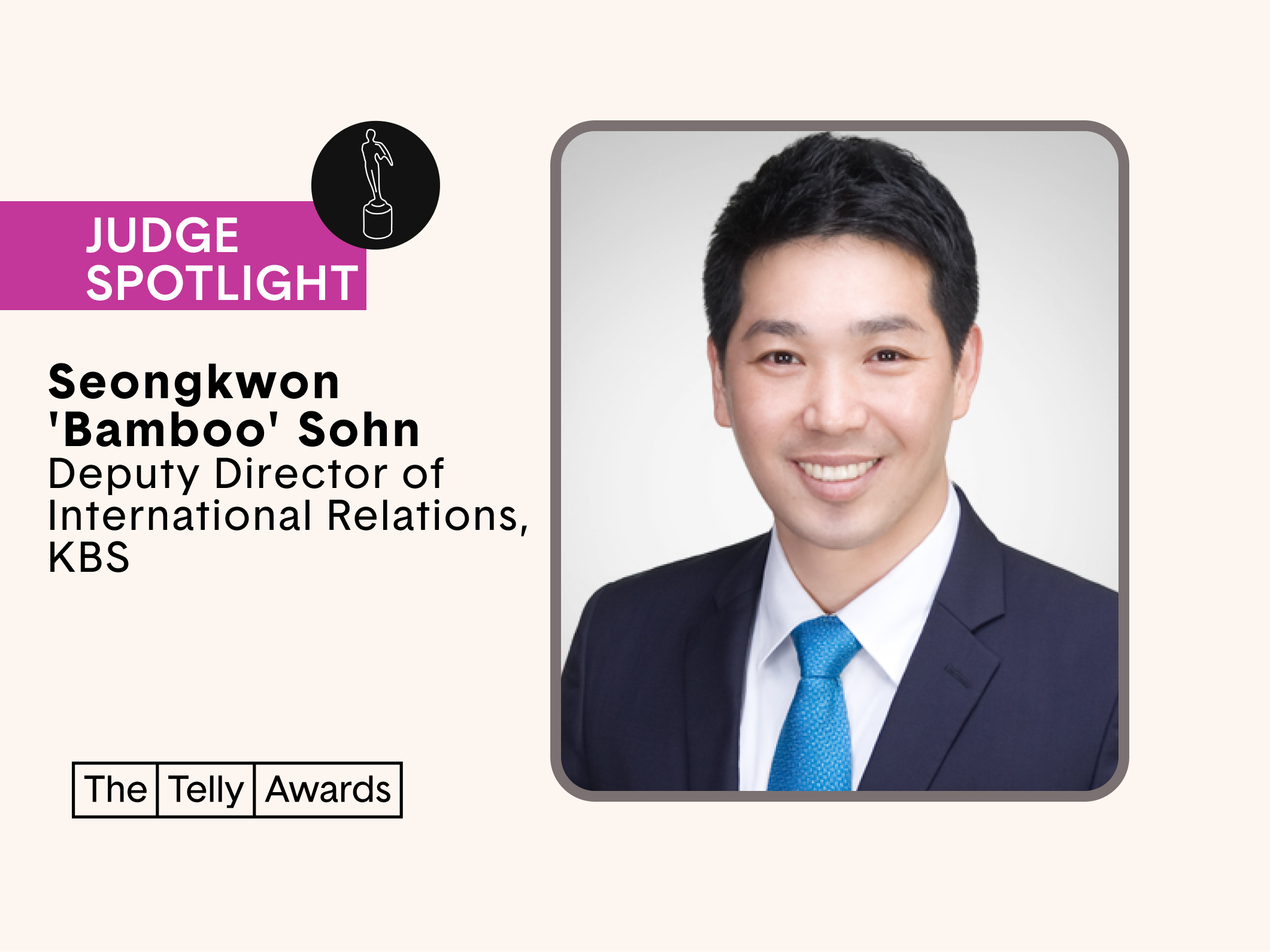
I started my career at KBS as a producer and director in 2011. I like sports programs, so I have made nearly 100 sports documentaries and entertainment shows. I have experience directing international sports events such as the Olympics and the World Cup. I like to make programs that give various social messages. I hope my program will change the world a little positively someday.” Now I am working as a deputy director of International Relations team.
How many years have you been a judge?
This is my first year!
What excited you about judging for the Telly Awards?
Finding good works that can send a strong message to the world and change society in a more positive direction, evaluating them and letting them be known more, hoping that the Telly Awards will become the world’s lighthouse.
What was your first job in the industry? What did it teach you?
I was in charge of human resources to hire and educate the sales team. I’ve always thought about what kind of person suits our company, and I’ve learned a lot about the connection between people’s tendencies and work.
What project are you most proud to have worked on?
For the third year in a row, I created a documentary series in which disabled and non-disabled people teamed up to participate in national competitions. Korean society loved the documentary and I won numerous awards. It played a big role in changing society’s view of the disabled.
What’s the most challenging part about your job and/or the industry?
I tend to feel most challenged at work when progress is not immediately visible and I begin to question my own direction and abilities. I also find it difficult when I try to balance professional ambition with family responsibilities, as I feel equally accountable in both areas. Because I set high standards for myself, even meaningful achievements can feel insufficient, which often leads to deeper self-reflection. Ultimately, it is not failure itself that troubles me most, but the fear of becoming complacent or settling into a sense of ordinariness.
What do you look for to determine excellence in video?
I care a lot about whether the introduction-intermediate-end is well connected and people can generally easily understand and agree with the director’s intentions.
What are your current roles and responsibilities and what do you love most about your job?
I am a Deputy Director in charge of international cooperation and discusses co-production with broadcasters around the world. It is great to interact with many other people who make videos and movies away from the limited gaze in Korea.
What initiatives or projects are you working on now that excite you?
I recently made a documentary. The story is about a women’s handball team that won the gold medal at the Athens Olympics, and women in their 50s who retired for nearly 20 years meet again to participate in amateur competitions. Through this, older women tried to send a message to make society healthier again through sports.
Do you have any specific practices you lean on to spark creativity?
I change my environment, not just my thinking. Stepping away from the desk, revisiting real-world moments, and reframing ideas from the audience’s perspective helps me regain creative clarity. I am so happy that my office is just near from a lovely park I can walk anytime.
What inspired you to pursue your career path?
I spent watching television with my father. Sitting together in front of the TV was one of the moments I felt most connected to him, and through those programs, I began to learn about the world beyond my own everyday life. Television introduced me to different people, places, and perspectives, and it gradually shaped how I understood society and storytelling. From a young age, I found myself drawn not only to watching these programs, but to imagining how they were made.
In your experience, what is a significant change you are seeing happen in the video, television, and/or film industry, and what insight can you share about how to navigate it?
I’m afraid that AI replaces most of people’s work, and now doing it more sophisticated and stylishly than humans do will lead to the conclusion that we don’t need people anymore. I’m afraid humans will be pushed out of AI with a stronger humanity.