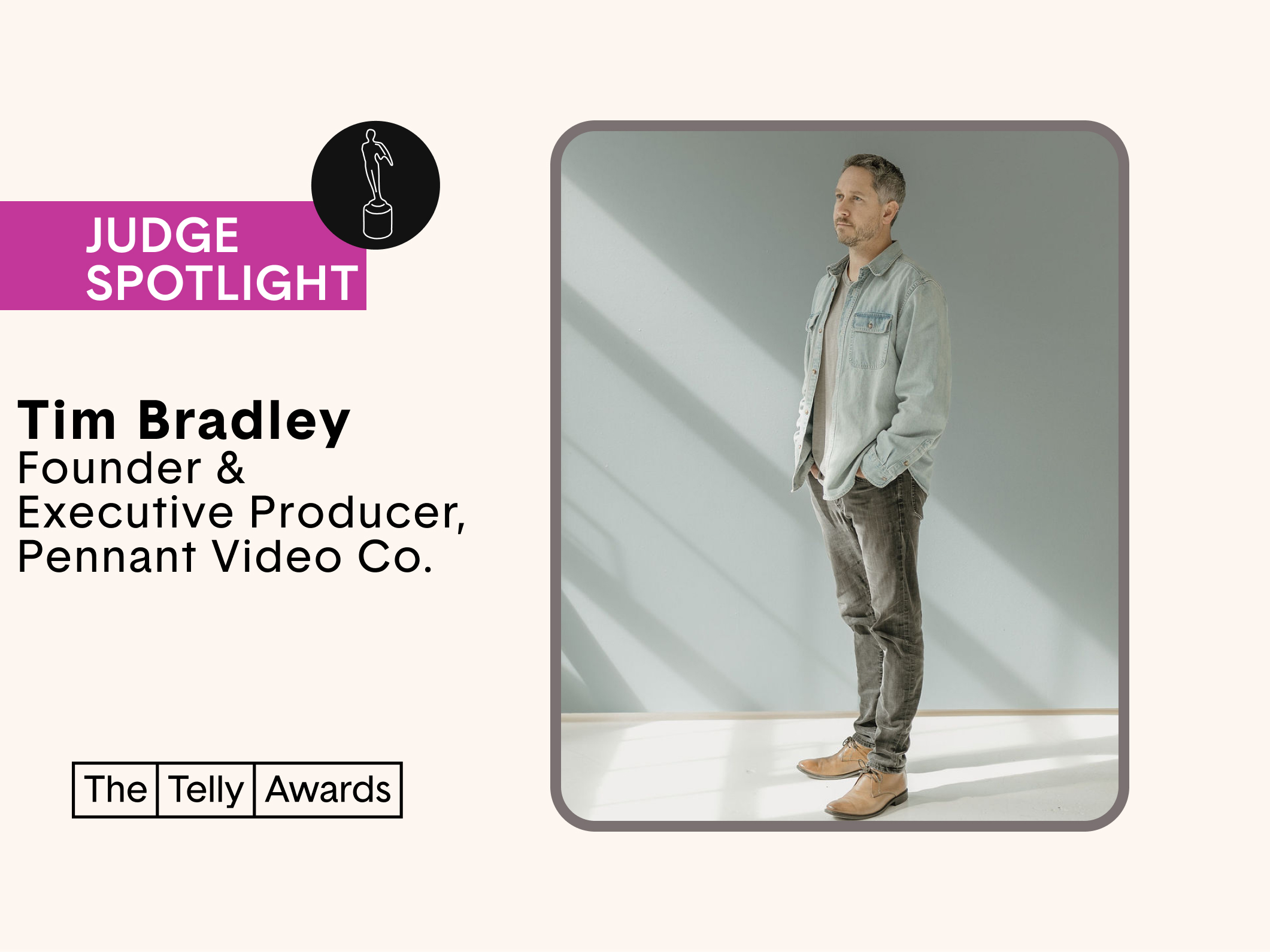
Tim Bradley is the Co-Founder of Pennant Video, a B2B-focused agency that has pioneered the Video Marketing Trifecta™ to power mid-funnel marketing strategies. With nearly two decades of experience in video marketing, Tim has partnered with leading B2B tech brands like Cisco, Hitachi, Philips and countless startups, bringing their stories to life with compelling video campaigns.
Before founding Pennant, Tim was the Executive Producer at a large communications agency. In his 12 years there, he built, managed and mentored a 25-person creative team, while growing the business in competitive sectors such as tough tech, cybersecurity, and healthcare. He believes in creating work that cuts through the noise—methodical yet bespoke, scalable yet unique. Beyond client projects, Tim mentors aspiring creatives through workshops and portfolio reviews, reinforcing his belief that elevating new talent fosters a more innovative and story-driven industry.
Tim has built an engaged following on LinkedIn by being relatable, authentic and authoritative, with equal parts actionable insights and compelling storytelling. (And the occasional dad joke.) He believes strongly in the power of community and mentoring, that connections mean more than just a numbers game, and that young creatives deserve the wisdom he’s gained over a long and ongoing creative career. His philosophy is simple: create meaningful connections through impactful stories that resonate and endure.
Outside the office, Tim draws inspiration from his love of snowboarding, family, and the outdoors, channeling the focus, adaptability, and persistence honed on the slopes into navigating today’s competitive marketing landscape.
How many years have you been a judge?
2-3 years!
What’s the most challenging part about your job and/or the industry?
Balance. Balancing creative ambition with budget constraints. Balancing client expectations with what’s actually possible. Balancing the craft of storytelling with the realities of timelines, approvals, and feedback loops. And on a personal level, balancing work with family life. There’s this constant push and pull between wanting to make the best possible work and knowing when to let go. The industry rewards speed, efficiency, and scalability, but truly great work takes time, care, and thoughtfulness. Figuring out how to keep those priorities in check without burning out—that’s the real challenge.
What do you look for to determine excellence in video?
It’s about the sum of the parts. The best work isn’t just visually stunning; it’s cohesive. The best work starts with a great idea and is executed seamlessly from concept to post-production, with every element—writing, cinematography, sound, pacing—working in harmony.
But it also has to connect. Whether it’s a commercial, a branded video, or a feature film, the real test of excellence is its impact. Does it stick with you? Does it make you feel something? Does it change the way you think, even for a moment? That’s the kind of work that lasts.
Ultimately, great video respects both the craft and the audience. Every frame, every word, every choice should be intentional—not just to look good, but to create something that lasts.
How do you unwind from work mode?
The irony of working in video is that I love watching videos. But at some point, you have to step away from the screen, or you just end up living in a never-ending feedback loop of content.
So, I make a point to disconnect. One day each weekend, I try to put the phone down completely. No doom-scrolling, no catching up on industry news—just getting out in the real world. That could be snowboarding, taking my kids to a museum, or just going for a long walk without my headphones in.
It’s easy to think that “unwinding” means doing something passive—sitting on the couch, watching TV. But for me, real unwinding happens when I’m fully present in something else. Engaging with the physical world, with people, with experiences. That’s what actually recharges me. Then, when Monday rolls around, I’m coming back with clarity, instead of feeling like I’ve just been in a different kind of work mode all weekend.
Do you have any specific practices you lean on to fuel your creativity?
For me, creativity isn’t a solo sport—it’s fueled by community and collaboration. I work remotely, which means a lot of my day is spent staring at a green dot on a screen, talking to people over Zoom. That can get isolating, and isolation is a creativity killer. What actually gives me energy is getting out of my own head and bouncing ideas off other people.
Some of the best ideas come from just talking things through—whether it’s with my team, other creatives in the industry, or even people outside the space entirely. A quick Slack message can turn into a full-blown brainstorming session. A casual conversation at an event can spark a new way of thinking. It’s that push and pull of different perspectives that takes an idea from “fine” to “let’s go make something amazing.”
And then there’s the larger creative community. Showing up to events, staying plugged into what others are working on, and sharing ideas freely—that keeps the creative fire going. It’s not just about networking; it’s about surrounding yourself with people who challenge and inspire you. When you see others chasing big ideas, it reminds you to do the same.
When did you know that this career is what you wanted to do?
I didn’t have one of those “lightning bolt” moments where I just knew. It was more like a slow build, a series of small creative sparks that eventually turned into a career.
Growing up, we had this big, clunky VHS camcorder that my brothers and I would mess around with. At first, we were just goofing off, but then we started making actual stories—stop-motion with Legos, scripted bits, little experiments. At the same time, my parents put me in weekly watercolor painting classes. So, from early on, I was always playing with visuals and storytelling, even if I didn’t realize it.
Later, in college, I studied communications—a mix of radio, print, journalism, and video. The second I picked up a camera and started editing, something clicked. It wasn’t just about making things look cool; it was about using visuals to connect, to move people. And beyond that, it was clear video wasn’t just a fun creative outlet—it was becoming *the* way people consumed information. It was obvious: this was the medium, this was the path.
So I followed that thread. First through DIY action sports filmmaking, then agency work, then building my own thing, always chasing the challenge of making something *work*—not just look good, but actually move people. That’s when I knew I was in the right place.
What company do you work for?
Pennant Video Co.
What is your current role / title?
Founder, Executive Producer
What are your current roles and responsibilities and what do you love most about your job?
I’m the Founder and Executive Producer at Pennant Video, which means wearing a lot of hats—some that fit perfectly, others I’m still figuring out.
At its core, my job is about shaping stories and leading an insanely talented team to bring them to life. That means creative direction, strategy, production oversight, and keeping projects moving. Some days I’m deep in logistics, managing budgets and timelines to keep everything running smoothly. Other days I’m in full creative mode, brainstorming, scripting, refining edits, and sweating the details that take a video from good to great.
What I love most? The collaboration. Seeing an idea go from a half-baked thought in a brainstorm to something real that moves people never gets old. When the right team is firing on all cylinders, it feels like a perfectly executed play, where every pass, cut, and decision leads to the perfect finish.
Also, there’s nothing quite like that moment when a project finally lands in front of an audience and works—when it resonates, when it gets the reaction we were hoping for. That’s the kind of moment that makes all the hard work worth it.