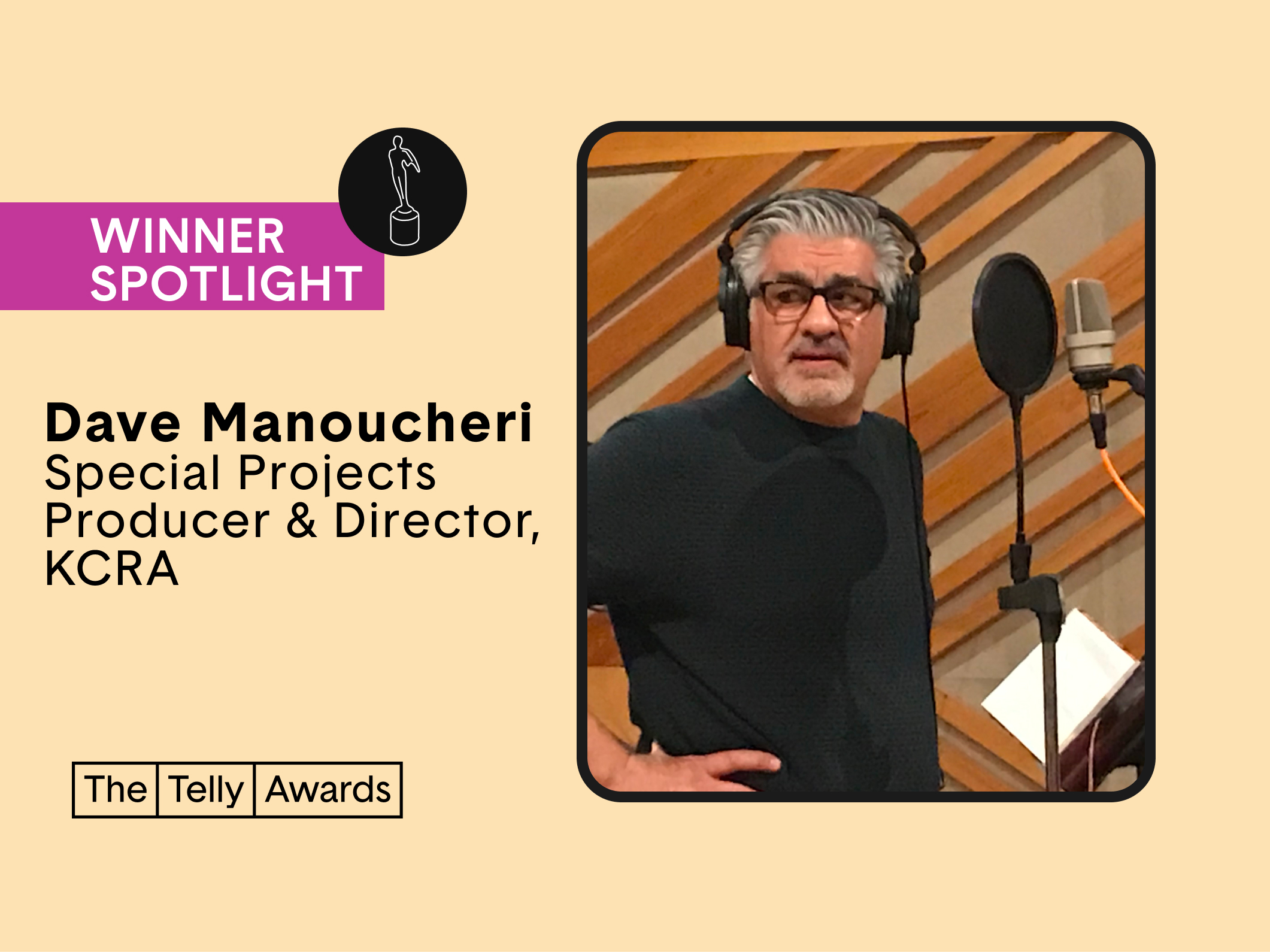
Tell us a bit about your organization and what your specialty is in the film and video space.
KCRA is a local news station owned by the Hearst Corporation. Our station has always excelled at news specials and long-form storytelling, and in recent years, post-pandemic, we really excelled at producing feature documentaries. We have been fortunate to be recognized by organizations like the Tellys for that work, covering everything from straight documentaries to sports and DEI. Partnering with our parent company and the Hearst-owned streaming platform Very Local, along with using sites like Vimeo and YouTube, we now find our audience not just locally in Sacramento but nationally and internationally for stories that connect. It is those stories about people that are universal.
How can people join or learn more about what you do?
All of our projects, including those from other members of the unit, live on KCRA.com as well as the KCRA YouTube channel. I think Hearst, the company that owns our station, is a great resource and loves to encourage and groom talent. Hearst careers are online and people can move up and work for some of the stations and move up in the company. You may be lucky enough to come to a station like ours with this kind of content, or you may love doing what you do in a newsroom every day and move up that way too!
Tell us about your Telly Award winning piece. What’s the story behind it?
Always Remember Your Name is the result of five years of work. It started with a Facebook message to co-producer Deirdre Fitzpatrick from Andra Bucci’s daughter, saying that they were both runners and maybe Deirdre would want to do a story on her mom. Instead, it became clear this was a story that had never been told. Not only were Andra and her sister Tatiana two of the youngest survivors of the Auschwitz-Birkenau concentration camp, they were also two of the only children reunited with both parents after the war.
Their story was one of a whip-smart mother who told them, after being tattooed in the camp, to always remember their name. They survived by the kindness of guards who were terrible to others, the orphanage run by Sigmund Freud’s daughter who gave them trauma therapy, and the mistake by Josef Mengele, who believed they were twins, hoping to do medical experiments on them.
Today, they both go back multiple times a year, to Italy where they grew up and then to Poland, with 100 to 200 school-age kids in tow, and walk them through the camp, giving them a personal view of the world where they lived. They send a universal message: think for yourself, don’t blindly follow what you are told, and every child, no matter their station in life or place in the world, has the right to grow up to become an adult.
What are you most proud of about this piece? What was your biggest challenge during production and how did you solve it?
This piece has become a legacy for Andra Bucci and her family. Each day the number of Holocaust survivors gets smaller, so to have this live on is truly something very inspiring. Yet the story isn’t just Nazis, fascists, guard towers, and old footage. She’s got a lot of things to say and her story is a human one. It’s not just about the Holocaust, but it’s got its start there.
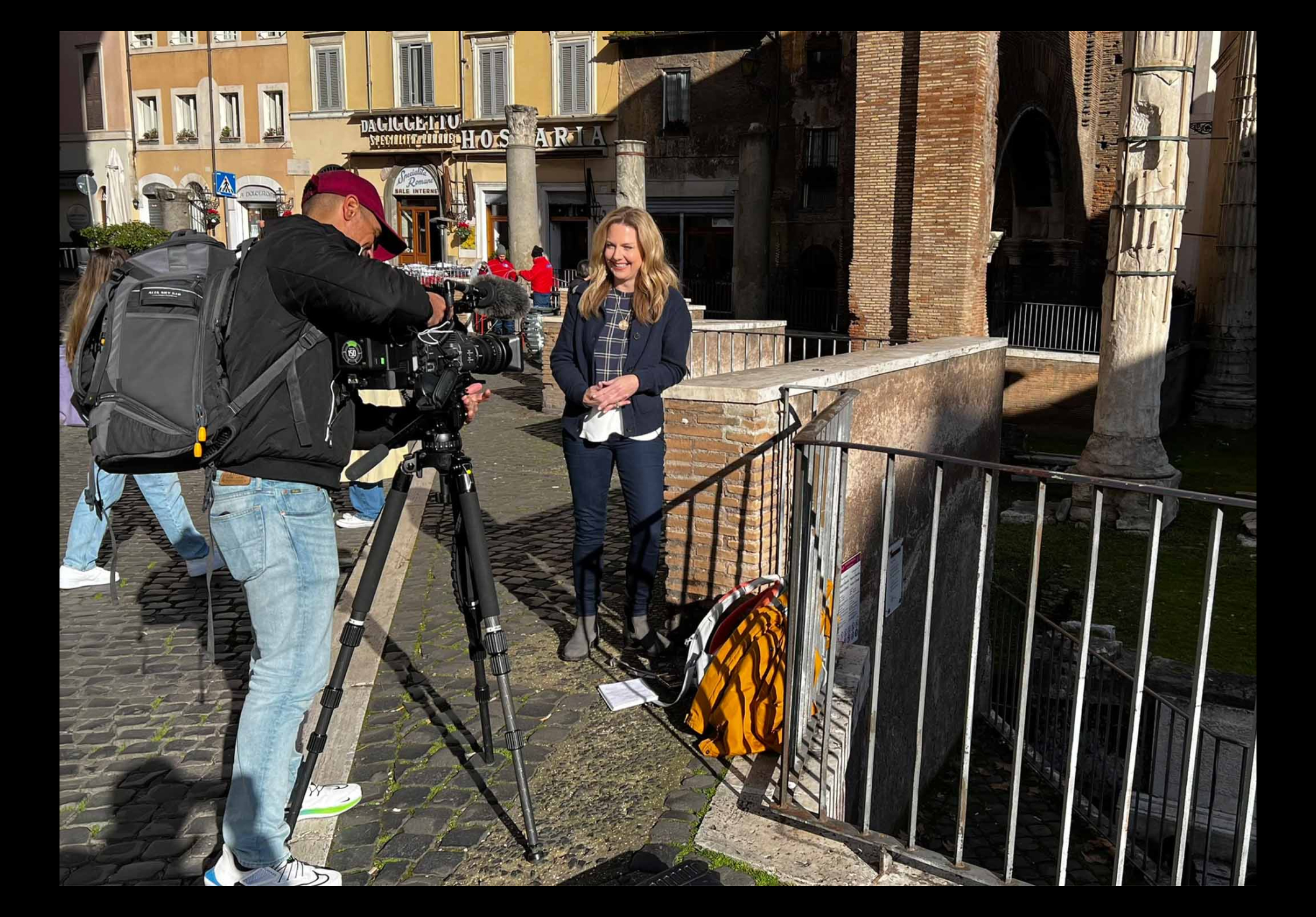
It was difficult for a number of reasons. Shooting in other countries requires different permits, an EU drone license, and navigation of all the regulations there. It’s nowhere near the kind of thing we do in the U.S. Still, paperwork and bureaucracy are fairly universal and it’s understanding your paperwork, mainly. The big challenge was in post-production. This was a documentary where the principals spoke in two different languages. Trying to subtitle Italian interviews into English was grueling. I had not used the AI transcription in Adobe Premiere as extensively as I had in this. The plugin for additional languages to transcribe the Italian, then put into a script and have it translated to English, eased some of that burden. As we went to production we took the final sound bites and gave them to a translator who verified and modified them if needed.
Do you have any advice to other filmmakers based on your career or your team’s approach to work?
We absolutely use our backgrounds in journalism to inform how we approach any of the documentaries or projects we work on. As such, we never come in with a preconceived thought that the interviews have to tell the story we want. Often, the story changes with the information and people we encounter. Documentary storytelling has certainly hit a point of straightforward advocacy in some cases, but we strive to bring the talents and ideas of filmmaking with the tenets of our journalism backgrounds to tell stories that affect people and the places where they live.
Can you share a behind the scenes story or fun fact about the making of your piece?
We were shooting in a hotel basement room in Krakow, Poland, where Andra was giving her testimony to a group of children before heading to the camp the next morning. Our cinematographer, Victor Nieto, had gone up to his room to swap out SD cards and gear and changed his clothes to be more comfortable, then returned. As he grabbed the camera and moved to the front of the room he was away from the translator and myself, expecting only to get footage. Yet at that moment, Andra stopped her story and looked at Nieto, speaking in Italian to the audience. Victor had switched to a t-shirt and shorts (it was January in Poland) and Andra began poking fun, in Italian, at him. “He’s from California. For some reason Californians think they should wear shorts and flip-flops all the time. If he could he’d wear them to Auschwitz tomorrow.” The crowd erupted in laughter and Nieto was looking at them, realizing he’d been the center of the joke, whatever it was, and leaned over when the laughter subsided to say “Grazie, Andra,” getting another massive fit of laughter from the crowd.
Tell us about the most memorable response you got from this work.
It is kind of the same response from two places: when we released the longer, feature-length version of this, the University of Arkansas screened it on the same day that Auschwitz was liberated, celebrating the 80th anniversary that way. By the same token, my alma mater, the University of Nebraska at Omaha, is screening it this coming spring as well, something I never in my wildest dreams thought would happen. In conjunction, they’re using a school curriculum we created to bring school kids to the screening and use as an educational component.
Complete this sentence: ‘Great video storytelling is…’
…getting out of the way and letting the people and the visuals tell their story.