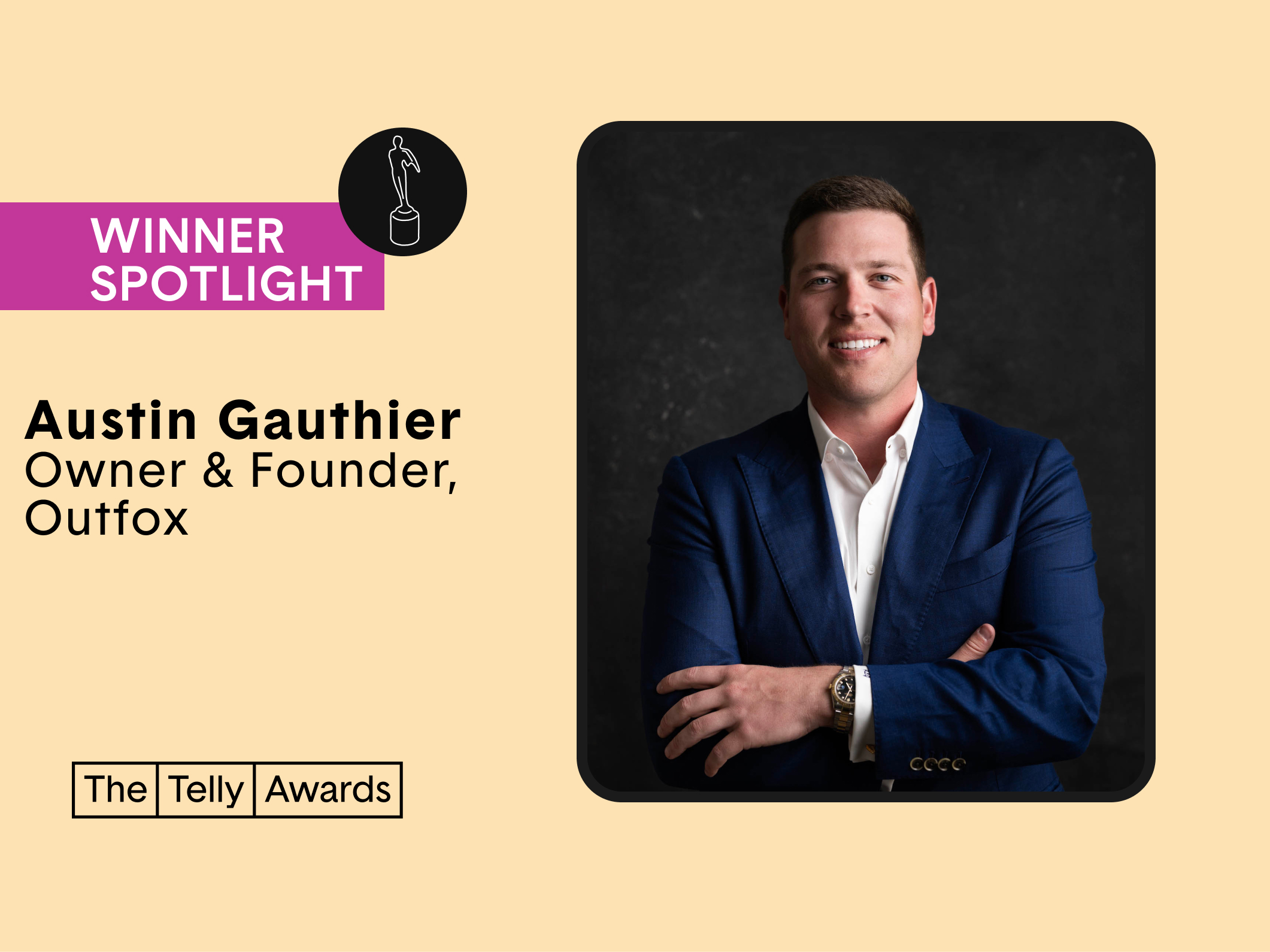
Tell us a bit about your organization and what your specialty is in the film and video space.
Outfox is a full-service creative and marketing agency based in Youngsville, Louisiana. We present ourselves as more than just a typical “production vendor” — as we aim to deliver a start-to-never-finished service experience, meaning we continue supporting clients beyond just delivering the initial product.
Within that full-service umbrella, one of our core strengths is videography and video storytelling. We conceive, produce, edit, and deliver brand films, promotional spots, corporate storytelling pieces, and cutdowns (shortened versions) of longer-form content — tailored to our clients’ marketing and branding goals. Our recent work includes the brand film for M&M International, which won a Gold Telly Award this year.
Because we are also immersed in branding, photography, and digital marketing, we see video not as an isolated output but as an integral part of a larger brand narrative. We design video strategy in harmony with messaging, brand identity, and media/distribution plans.
What is your organization’s ethos and how does it set you apart from industry competitors?
Don’t Blend In. Stand Out. Our tagline appears prominently throughout our branding and it captures our belief: we strive to push toward originality, visual surprise, and narrative impact — rather than safe conformity. We treat each engagement as the beginning of a longer journey, not a one-off transaction. We aim to stay in partnership with clients, always evolving and supporting their marketing strategies.
Our inspiration is drawn from genuine lives, real environments, and authentic brand characters. We encourage our team and clients to entertain ideas outside of the predictable — the notion is that breaking conventions (responsibly) often yields more memorable results. Because we operate in a hybrid creative + marketing + narrative space, we bring more holistic thinking to video than agencies that only “shoot and deliver.” We think through brand alignment, messaging integration, distribution, and post-launch phases.
Our service-minded approach (start-to-never-finished) means we are more invested in sustained outcomes than one-off deliverables.
We combine visual ambition with process discipline — we push creative boundaries while keeping projects grounded in strategy, timelines, and client objectives.
Finally, our willingness to take calculated creative risks gives clients the chance to stand out in their industries.
How can people join or learn more about what you do?
If someone wants to engage with Outfox, here are a few pathways:
- Explore our website. Our homepage and “About” section give a full view of our services in photography, videography, branding, and digital marketing.
- Follow us on social media. We regularly share work in progress, new campaigns, behind-the-scenes glimpses, and storytelling insights.
- Reach out for conversation. Whether you’re a client, a collaborator, or a creative looking to join the team, you can contact us via the contact form on our site or via direct email/social DMs.
- Internships, mentorship, or freelance opportunities. As our capacity evolves, we may open roles or creative partnerships; those interested can submit reels, portfolios, or proposals.
- Attend industry events and screenings. We sometimes present or participate in film/video, marketing, and branding events — engaging with us there is a great way to see our work and ethos live.
Tell us about your Telly Award winning piece. What’s the story behind it?
One of the most gratifying and memorable productions we’ve had is our film for M&M International. What really stands out is the feedback from M&M’s leadership and stakeholders: they told us that their brand film transformed how their own team, suppliers, and partners saw the company’s identity. It became a point of pride, a rallying piece that invigorated internal culture and external perception.
Also, we’ve had folks tell us that the visuals and pacing felt “cinematic in a way you rarely see in the oil and gas B2B industry.” Hearing that the film caused people outside the immediate client circle to pause, share, and reflect — that’s the kind of response that tells you you’ve done more than “checked boxes.”
What are you most proud of about this piece? What was your biggest challenge during production and how did you solve it?
What I’m most proud of is that we were able to capture the energy and scale of the operation without disrupting the client’s workflow. In the oil and gas industry, production schedules can’t be paused, so our biggest challenge was finding ways to film efficiently while staying completely out of the way. We solved this by planning meticulously, coordinating closely with the client, and adapting our approach on site to ensure that safety, productivity, and storytelling all aligned seamlessly.
Do you have any advice to other filmmakers based on your career or your team’s approach to work?
Yes — a few lessons and guiding principles that have served us well at Outfox.
- Start with purpose, not visuals. Before you pick a camera or shot list, clarify why you’re telling the story and who you’re speaking to. Every creative choice should serve that core intention.
- Don’t fear the “negative space.” Some of the strongest storytelling moments come from pausing, withholding, or letting silence breathe. Over-explaining usually dilutes impact.
- Iterate early and often. Rough cuts, test screenings, internal critiques—invite feedback early, so you catch narrative or pacing missteps before you’re deep in final color correction.
- Learn from other disciplines. We borrow from branding, theater, journalism, visual design, even UX thinking — blending perspectives tends to generate fresh ideas.
- Invest equally in pre-production & post-production. So many projects rush pre-production logistics or narrative design and try to “fix it in post.” That rarely works. Strong story design, shot planning, and editorial vision up front pay dividends.
- Keep a “living portfolio” mindset. As technologies, formats, and audience expectations evolve, keep experimenting (e.g. vertical video, immersive formats). Don’t rest entirely on what’s worked before.
- Cultivate client trust and education. Some clients have limited exposure to compelling video. Be a thoughtful partner: explain your rationale, show references, invite them into the process. When clients feel invested, the final product often lands stronger.
Can you share a behind the scenes story or fun fact about the making of your piece?
One of the surprises during this shoot was realizing just how large the M&M facility actually is. We ended up carrying all of our equipment by hand across the site, which was both challenging and exhausting for the crew. It definitely taught us a lesson—next time we’ll be sure to bring a golf cart to move both the team and the gear more efficiently!

Tell us about the most memorable response you got from this work.
The most memorable response came from seeing how the finished piece resonated beyond its intended audience. Not only did it strike a chord with the client and their internal team, but it also generated reactions from peers and industry professionals who noted that the work elevated expectations for storytelling in this industry. The recognition it received underscored that we had created something that was not just visually compelling, but also emotionally meaningful and culturally relevant.
Complete this sentence: ‘Great video storytelling is…’
… the art of connecting hearts and minds through narrative, visual language, and emotion — transforming information into experience.
In practice, that means you don’t just explain — you invite the viewer in. You let them feel a thread of tension, character, aspiration, or conflict. You trust them to be part of the journey rather than passive recipients.