Tell us a bit about your organization and what your specialty is in the film and video space.
Soulcraft Allstars specializes in mission-driven storytelling around the world. From Africa to Alaska we work alongside communities to tell powerful stories and bring people together.
What is your organization’s ethos and how does it set you apart from industry competitors?
We believe in the power of storytelling to unite people to work together to solve the problems of our time.
How can people join or learn more about what you do?
Follow me on Instagram @mazama or @soulcraftallstars.
Tell us about your Telly Award winning piece. What’s the story behind it?
Eighty-five years ago John Steinbeck and his best friend Ed Ricketts decided to skip out of the US and head to Mexico aboard a 77 foot wooden vessel called the Western Flyer. The trip – part science expedition part adventure part philosophical journey became an award winning book, “The Log from the Sea of Cortez.” The book inspired a generation of marine biologists and artists in love with the ocean and a new way of thinking. Sunk twice the boat was reclaimed and folks spent $6M renovating her into a new talisman of art and science. This is the first return trip to its home in Monterey, California with Nick Offerman as the voice of reason.
What are you most proud of about this piece? What was your biggest challenge during production and how did you solve it?
We needed a narrator. Someone who loved literature, wooden boats, and deep thinking with a sense of humor. I thought Nick Offerman would be perfect but I didn’t know him. After cold emailing his agent’s secretary, we were rejected in ten minutes only to be offered a meeting ten minutes later. I guess Nick was a fan of the Western Flyer. The rest is history.
Do you have any advice to other filmmakers based on your career or your team’s approach to work?
One of Steinbeck and Ricketts friends and influences was the great mythologist Joseph Campbell and he famously said, ”Follow your bliss.” He was referring to part of what he calls the “heroes journey.” It takes bravery but in the end there is no other life. This is true in filmmaking and all other pursuits. I get afraid like the rest of us but I am often rewarded when I bravely follow my bliss regardless whether it makes sense to anyone else.
Can you share a behind the scenes story or fun fact about the making of your piece?
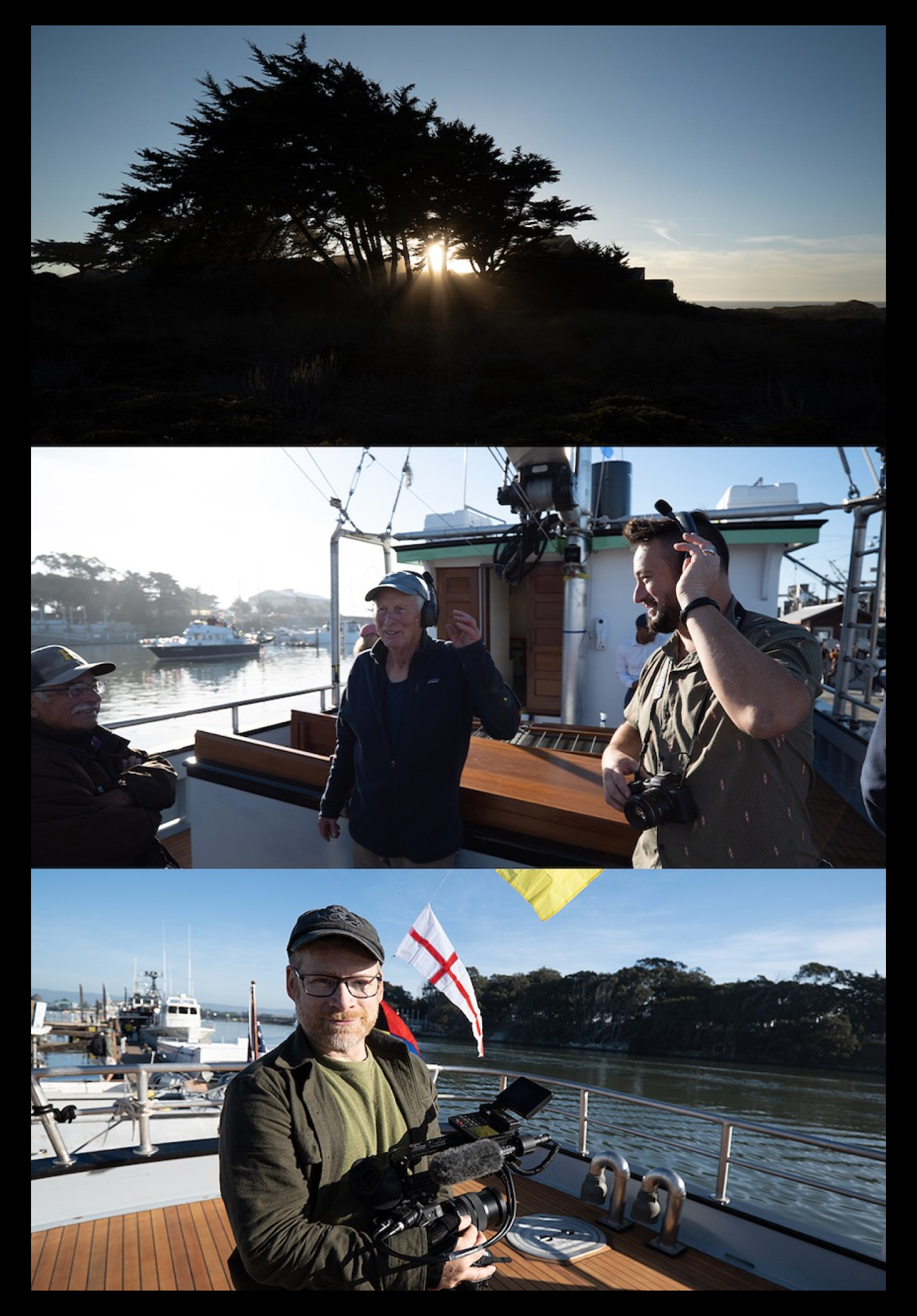
On a ferry to Haines Alaska where I was to film grizzly bears, I met the guy who had found the Western Flyer and was spending 10 years and $6M to bring her back to life. Steinbeck had shaped my youth (and my passion for storytelling) and John Gregg opened my eyes to the beauty of this particular chapter of Steinbeck’s personal enlightenment. Standing next to me while I filmed grizzly bears on a river in Haines, Alaska, he asked me to tell the story. My 12 year old self would have spit out his Gatorade if he could see me now.
Tell us about the most memorable response you got from this work.
Ship captains, authors, filmmakers, biologists, ocean health activists, students, and arts of all walks of life from around the world shared their stories of being inspired by the book and now the movie. It was humbling. But one of the greatest things was alongside other awards, we won a gold, silver, and bronze Telly awards!
Complete this sentence: ‘Great video storytelling…’
… stirs curiosity!