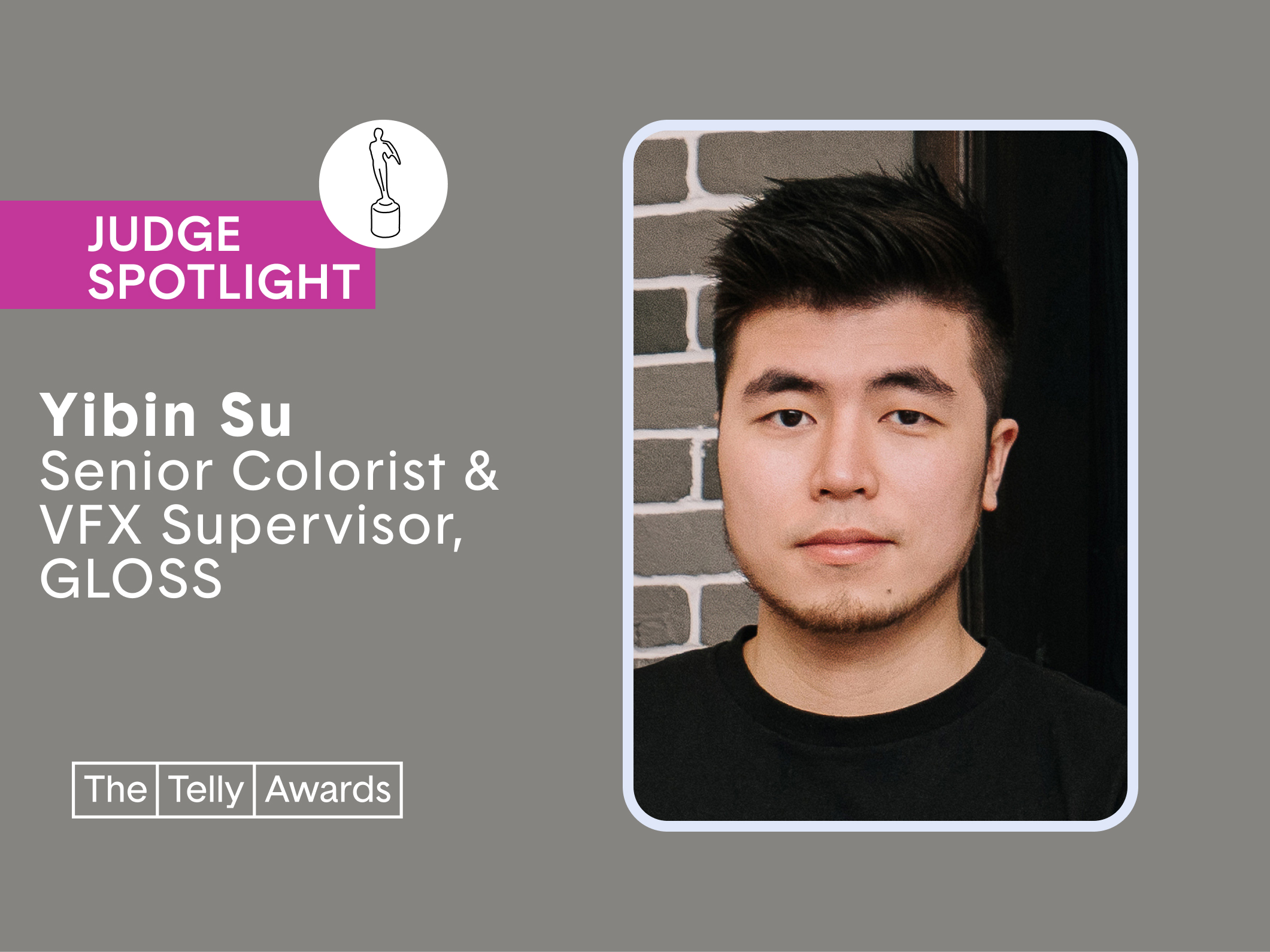
Yibin “AB” Su—known simply as AB—is a Senior Colorist & VFX Supervisor who brings stories to life through bold, expressive color. With a decade of industry experience, he has shaped the visual language and final image finishing for global brands and major entertainment clients. His recent work includes Renaissance: A Film by Beyoncé, Death of a Unicorn, and Apple TV+’s Disclaimer, as well as campaigns for Estée Lauder, Swarovski, Miu Miu, and Max Mara.
His work has been recognized with a 2024 HPA nomination for Outstanding Color Grading, multiple Telly Awards, and a Shark Awards nomination for Best New Colour Grader Under 30—but AB’s real motivation comes from the craft itself. He’s meticulous, collaborative, and endlessly curious—qualities that guide him whether he’s building a complex workflow or losing himself in his favorite horror films.
Passionate, upbeat, and always ready for a creative challenge, AB brings personality, precision, and heart to every frame.
How many years have you been a judge?
This is my first year!
What excited you about judging for the Telly Awards?
I’ve always seen the Telly Awards as a meaningful platform. I’ve participated before by submitting my own work and was honored to receive several awards. This year, being invited back as a judge feels especially meaningful. I believe the Telly Awards truly recognize outstanding talent and exceptional work, and I want to contribute to that mission.
I hope to help discover and support new and emerging creators—especially younger talent who are doing remarkable work. The Telly Awards encouraged and uplifted me in my own journey, and I’d love to help pay that forward by encouraging others to continue creating excellent work.
What was your first job in the industry? What did it teach you?
Funny enough, I started out as an assistant editor at a post-production company. On my very first day, I hit it off with the lead colorist, and he asked if I’d be interested in working in color instead. By my second day, I had already been transferred to be his assistant—talk about luck!
The best part of that first job, and something that still shapes my career today, was the training week. Instead of focusing only on technical skills, they taught us the mindset every post-production professional needs: stay organized, be considerate when collaborating, anticipate potential issues, and remain flexible and resourceful when surprises come up. These principles continue to guide my work every single day.
Another thing I truly learned was how my mentor—the lead colorist—inspired me. I’ve embraced many of his values, and I continue striving to pass that same inspiration on to my colleagues and to new artists entering the field.
What project are you most proud to have worked on?
I believe it was the Miu Miu project featuring Gigi Hadid from last year that truly pushed my creative boundaries. I was inspired by how the campaign’s still photography celebrated the iconic color aesthetic of photographer Yevonde. Although video is a very different medium, I experimented with various techniques to capture Yevonde’s classic look—rich hues paired with porcelain-delectable dégradé pastels. This project not only earned me my first industry recognition but also a nomination for the Hollywood Professional Association’s Outstanding Color Grading Award. It remains one of the most rewarding experiences of my career.
What’s the most challenging part about your job and/or the industry?
Color grading and finishing mark the final creative phase before a project reaches its audience. Often, unexpected delays and setbacks in earlier stages compress our timelines, intensifying the pressure to deliver quality work on a tight schedule. Despite these challenges, I truly enjoy the creative process. I constantly balance the demands of strict deadlines, production requirements, and client feedback with my own artistic vision. This ongoing challenge pushes me to innovate and find ways to infuse creativity into every frame—even under pressure.
What do you look for to determine excellence in video?
I believe creativity is the most important element—whether it’s in storytelling or visual language. In today’s era of social media, originality, fresh perspectives, and new visual–audio experiences are what truly stand out and leave a lasting impression.
Coming from an indie filmmaking background, I also understand how challenging it can be to create high-quality work when you’re young and working with limited resources. That’s why connecting with audiences through thoughtful details matters so much. Telling a story with a sharp, distinctive angle can create a deeply personal experience for viewers.
Ultimately, it’s about sincerity—being honest in your work and creating something that resonates and stays with the audience.
What are your current roles and responsibilities and what do you love most about your job?
As Senior Colorist and VFX Supervisor, I design the visual style and color language for each project, creating looks that define its tone, mood, and identity. I collaborate closely with directors and cinematographers to translate creative ideas into cohesive color and lighting aesthetics.
I lead the finishing process, shaping the final image through color, retouching, and compositing to enhance both visual impact and storytelling. For each project, I also design specialized creative workflows tailored to its unique needs — ensuring every step of the process brings out the full visual and emotional potential of the work.
And I wouldn’t say I’m socially awkward, but I do experience burnout from working with people from time to time. Spending hours grading in a dark room—fully focused and connected to the story—gives me a sense of peace. It’s like my own little spiritual world, where it’s just the story, the visuals, and the music.
What initiatives or projects are you working on now that excite you?
I’m currently helping develop a horror short I previously worked on into a feature film, directed by a talented up-and-coming filmmaker. The project’s unique theme and style set it apart from mainstream films, which makes the color grading process especially fulfilling. Because of its tone and atmosphere, the film relies heavily on color to drive the story—this is the first project where color is truly a central narrative element. As a longtime horror fan, working on my first horror feature feels both exciting and deeply rewarding. I’m always eager to explore different formats and mediums, and each new experience brings fresh perspectives and skills that strengthen my work as a colorist.
Do you have any specific practices you lean on to spark creativity?
I make it a habit to watch a wide range of video formats—from movies, TV shows, and music videos to video essays and viral internet clips. I also stay up to date with industry trends, new projects, and emerging technologies. I believe that for creative artists like us, consuming diverse content, staying informed, and keeping pace with the industry are essential.
Whenever I come across something unique or inspiring, I take screenshots and notes, gradually building a personal reference library that I frequently revisit when working on projects. Beyond screen-based media, I also enjoy going to theaters and galleries to experience different forms of art—whether it’s stage performances, experimental films, paintings, photography, or contemporary installations. Exploring various mediums sparks new ideas, blending visual styles and modes of expression.
Most importantly, I believe in constantly experimenting. The more approaches we try, the more potential we unlock to create something truly great.
What inspired you to pursue your career path?
In high school, I joined the student union’s publicity department, where we handled social media, designed posters, and created videos. It was the first time I experienced the joy of making something from scratch. I continued pursuing that passion in college, learning more about video production—and as I shared earlier, that path eventually led me to meeting my colorist mentor and beginning my journey in color.
There was also a defining moment later on, during my first year as a protégé. One day, I had been working from 10 a.m. all the way through to 5 a.m. the next morning—completely exhausted but determined to finish a project. As the sky was just beginning to brighten, I took a short break and saw director David Sandberg post a photo of himself grading Annabelle in a theater. At that exact moment, the song playing beside me sang, “a star is making a leap into the Milky Way.” The next thing I remembered is I was telling myself: One day, I’ll be grading in a big theater too. It’s one of the fondest memories I have—one that has stayed with me and continues to push me forward in my career.
In your experience, what is a significant change you are seeing happen in the video, television, and/or film industry, and what insight can you share about how to navigate it?
One major change we’re all witnessing is the rise of AI. Many people fear that AI will replace our jobs or harm the motion picture industry. And yes, it is intimidating. But I see it as a technological shift we need to embrace and evolve with. Just like photography or film-based cinematography, both of which once faced the threat of being replaced, these mediums eventually found their place as unique and respected art forms. In fact, some of my favorite films today are shot on film and enhanced with modern techniques, creating completely new visual styles. AI is certainly a different kind of change, but the principle remains the same: as artists, we must continue learning, adapting, and advancing with the times.
Another shift is a renewed focus on the essence of artistry itself: creating experiences that feel genuinely new and emotionally authentic. In Chinese, there’s a word that captures this idea—often translated as “originality,” but it carries a deeper meaning. Literally, it refers to “the heart of the craftsman.” It’s not just about being original for originality’s sake; it’s about sincerity, intention, and the devotion an artist pours into their work. It’s the commitment to express your values, your worldview, and your craft with honesty. In a fast-changing industry, holding onto that sincerity is what keeps our work meaningful.