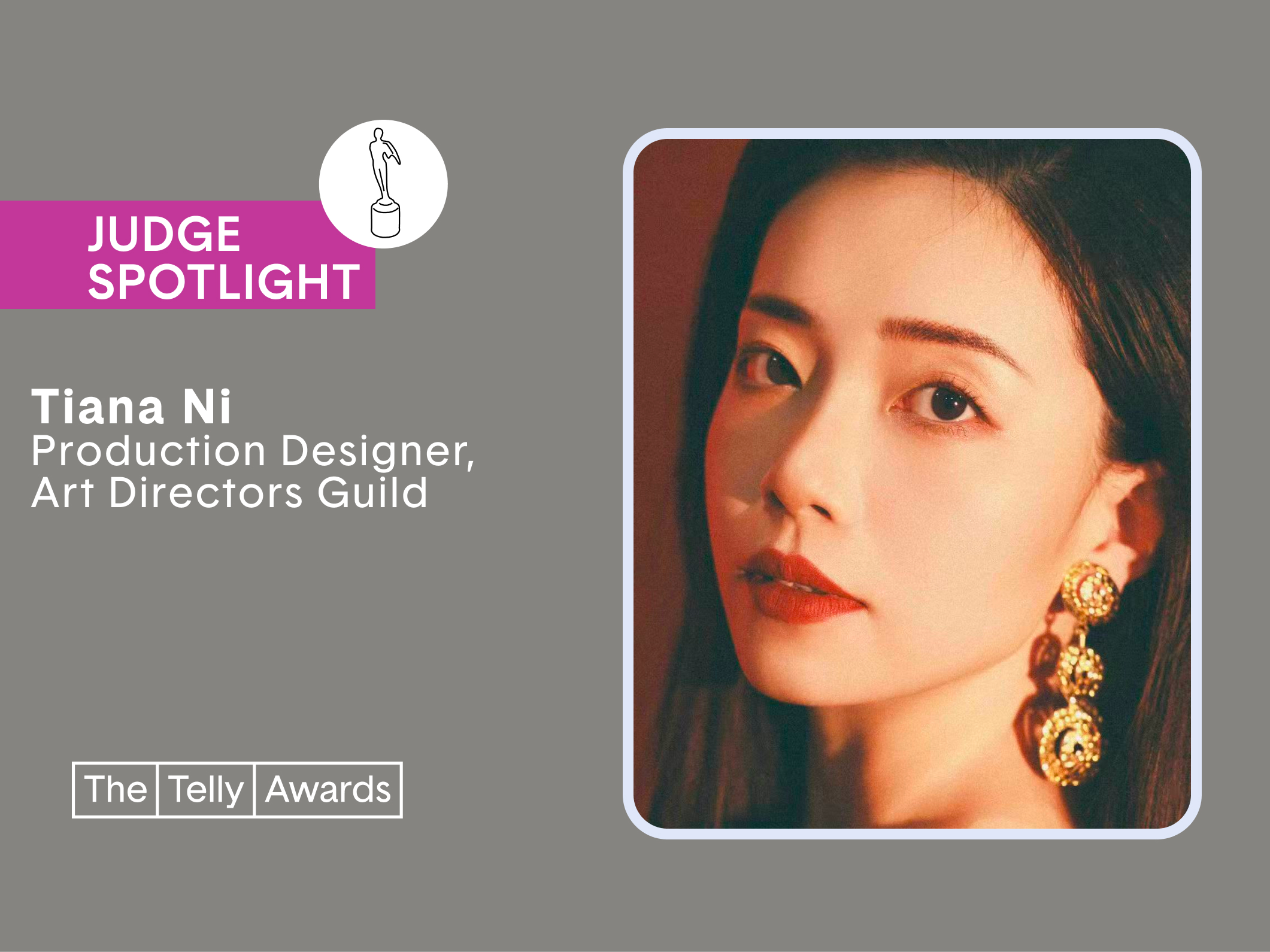
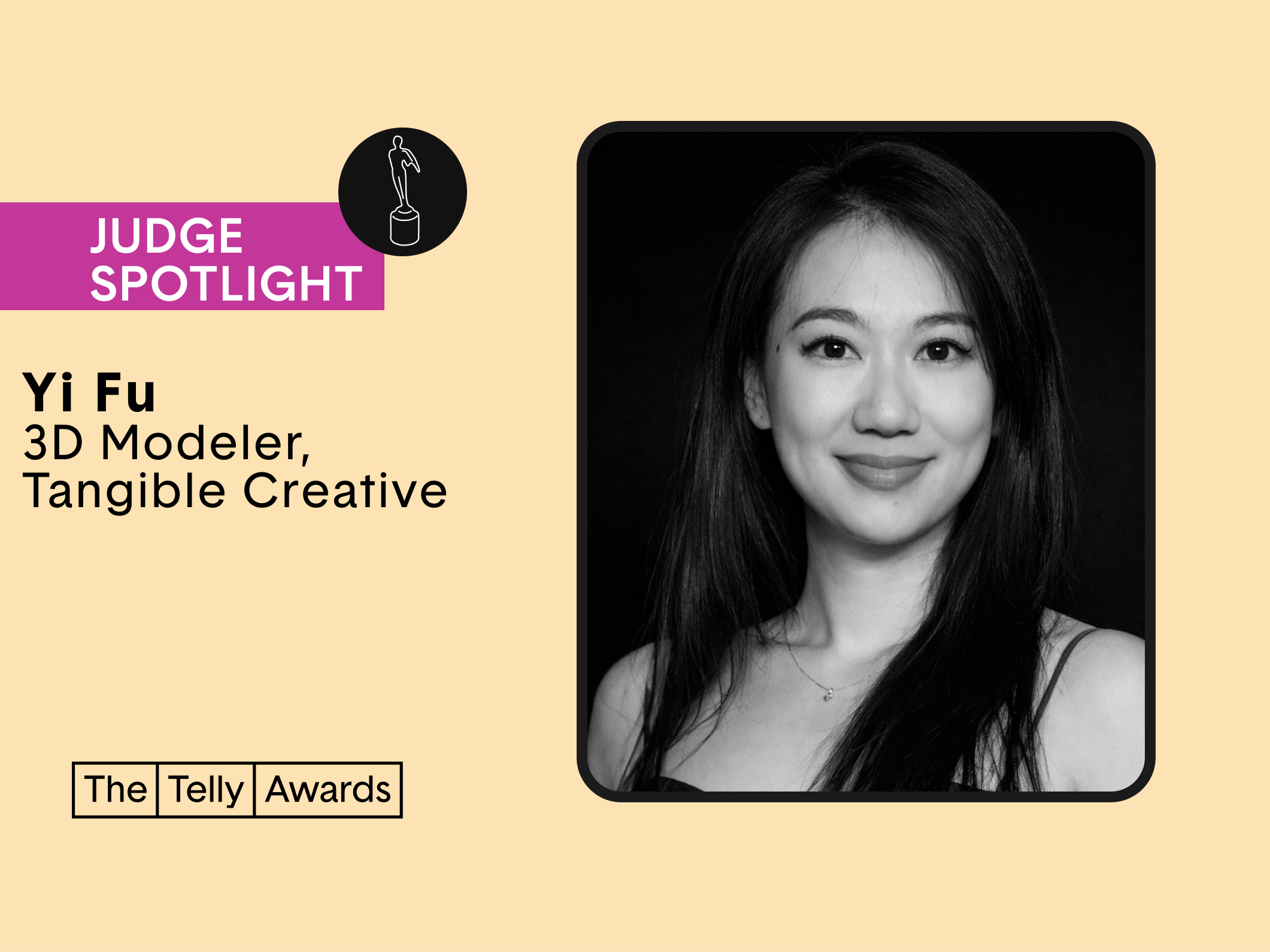
Yi Fu is a 3D artist specializing in production-ready digital modeling and visual asset development across live entertainment, broadcast media, retail installations, and consumer products. Her work includes engineering performance props for the international concert tour *The Lifetimes Tour*, creating collectible award assets for Nickelodeon’s NFL Slimetime season 5, and producing large-scale display models for Nike’s Fifth Avenue flagship store . She has also developed commercially manufactured retail products for the TJX Companies, translating minimal sketches into manufacturable designs through independent artistic and technical decision-making . Fu’s practice combines creative design with structural problem-solving, bridging digital visualization and real-world fabrication.
How many years have you been a judge?
This is my first year!
What excited you about judging for the Telly Awards?
Judging for the Telly Awards excited me because it allows me to step outside my own production pipeline and evaluate storytelling from a broader industry perspective. As a 3D artist, I’m usually focused on solving technical and visual problems—how to make an object believable, functional, and emotionally readable—but judging lets me instead analyze why a piece works: pacing, visual language, and how design supports narrative. I’m especially interested in how creators combine practical production constraints with creative decisions to communicate ideas clearly. Being part of the judging panel is also meaningful to me because it connects me to an international creative community and gives me the opportunity to recognize innovative work across different media formats.
What was your first job in the industry? What did it teach you?
My first job in the industry was working on a children’s animated television series, where I contributed to environment design, animation, and texturing. It was my first experience in a real production pipeline, collaborating with a team and working toward broadcast deadlines.
That experience taught me that production is very different from school projects. I learned how to work efficiently, follow naming conventions and technical specifications, and communicate with other departments so assets could move smoothly through the pipeline. Most importantly, it taught me responsibility—your work affects lighting, animation, and compositing teams after you. I began to understand that being a professional artist isn’t only about creativity; it’s about reliability, problem-solving, and supporting a team to deliver a finished piece on schedule.
What project are you most proud to have worked on?
I’m most proud of my work on the Nickelodeon NFL Slimetime badges, where I created the full set of 3D award assets from simple 2D concepts. Each badge needed to feel playful and appealing to a young audience while still matching official NFL branding, so I had to balance creativity with strict visual requirements. It was rewarding to see the designs turned into physical collectibles and become part of a nationally broadcast program.
What’s the most challenging part about your job and/or the industry?
The most challenging part of my job is balancing creativity with real-world constraints. Many projects start from very simple sketches or ideas, but the final design has to work physically—correct scale, safe structure, manufacturability, and tight deadlines. In this industry you’re not only an artist, you’re also a problem-solver, and you often have to make fast decisions that affect fabrication, production schedules, and other teams. Keeping high visual quality while meeting practical limitations and time pressure is difficult, but it’s also what makes the work rewarding.
What do you look for to determine excellence in video?
When I evaluate a video, I look first at clarity of storytelling—whether the audience can immediately understand the intention and emotional direction of the piece. Strong videos don’t rely only on beautiful visuals; every shot, edit, and sound choice should support the narrative. I pay close attention to pacing, shot composition, and how visual elements guide the viewer’s attention.
From a technical perspective, I also consider how well craft supports meaning. Cinematography, editing rhythm, sound design, and visual effects should feel intentional rather than decorative. Even simple productions can achieve excellence if the creative decisions are coherent and purposeful.
Ultimately, excellence is when technique becomes invisible—the viewer is not thinking about camera work or effects anymore, but is fully immersed in the story or message the video communicates.
What are your current roles and responsibilities and what do you love most about your job?
Currently, I work as a 3D artist creating production-ready digital assets for entertainment, broadcast, retail installations, and consumer products. My responsibilities include interpreting concept sketches, designing accurate 3D models, solving structural and scale issues, and preparing files for fabrication or on-screen use. Many projects start with very minimal references, so I often make key creative decisions about form, proportion, and visual style while also ensuring the design is manufacturable and safe to use in real-world environments.
What I love most about my job is the moment when something that only existed as an idea becomes real. I enjoy combining artistic thinking with technical problem-solving—balancing aesthetics, physics, and practical constraints. Seeing a prop used on stage, a product sold in stores, or a visual appear on screen is incredibly rewarding because it connects digital creation to real human experience.
What initiatives or projects are you working on now that excite you?
I recently completed a display model for Wind River Intel.
Do you have any specific practices you lean on to spark creativity?
I usually start by writing down a few very concise words that capture my immediate impression or feeling. Those keywords help me quickly define the direction, and then I develop the design by building and iterating around those initial ideas.
What inspired you to pursue your career path?
My career path happened quite naturally. I’ve always been drawn to things that have logic and structure and that actually work. 3D modeling fits that mindset perfectly—good topology and edge flow matter, because if the geometry isn’t built correctly it affects texturing, rigging, and animation later in the pipeline. I enjoy that balance of creativity and problem-solving, where artistic design still follow clear technical rules.
In your experience, what is a significant change you are seeing happen in the video, television, and/or film industry, and what insight can you share about how to navigate it?
One significant change I’m seeing is the blending of real-time technology and traditional production. Tools like real-time rendering, virtual production, and AI-assisted workflows are shortening production timelines and changing how teams collaborate. Assets are no longer created only for one final shot — they need to be flexible, reusable, and ready for multiple platforms, from broadcast to interactive media.
To navigate this shift, I think artists need to focus less on a single software and more on fundamentals. Understanding form, lighting, storytelling, and clean technical workflows is more important than mastering one specific tool, because the tools will keep changing. Being adaptable, organized, and comfortable learning new pipelines quickly has become just as valuable as artistic skill.