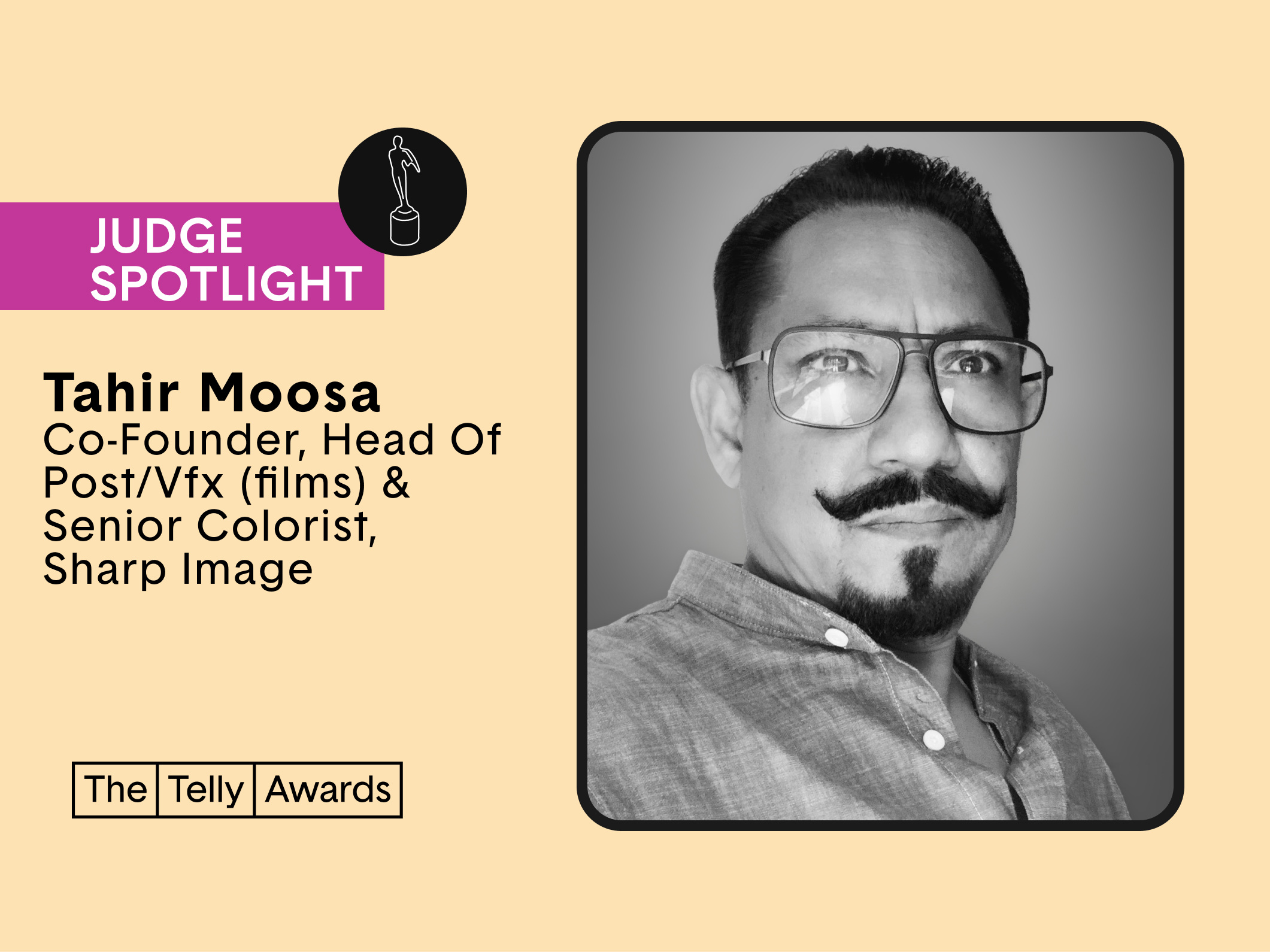
With three decades in post-production, animation, and color grading, Tahir Moosa is recognized as one of the leading creative professionals in South Asia’s media industry. He co-founded Sharp Image, a pioneering VFX and post studio, serving creators and brands worldwide. His portfolio includes collaborations with Toyota, Unilever, and BYD, and his expertise has been acknowledged through judging positions at the Telly Awards, Promax Asia and AICP Awards. Tahir’s work combines technical mastery with a deep understanding of storytelling and brand communication.
How many years have you been a judge?
1-3 years
What excited you about judging for the Telly Awards?
What excites me most about judging for the Telly Awards is the opportunity to celebrate creativity at its highest level. It’s inspiring to see how filmmakers and creators around the world push storytelling, craft, and technology to new limits each year. Being part of that process, recognizing and learning from such diverse talent, is both humbling and energizing.
What was your first job in the industry? What did it teach you?
My journey began as a freelance animation and VFX artist, learning by doing and experimenting with every project. Those early years taught me resilience, adaptability, and how to turn creative ideas into tangible visuals. It was a hands-on education in both the art and discipline of post-production that continues to shape how I work today.
What project are you most proud to have worked on?
The project I’m most proud of is Moor, a feature film we completed entirely in 4K at Sharp Image when 4K workflows were still in their early stages. Managing full-scale VFX and post at that level was groundbreaking for the region, and its selection as Pakistan’s official Oscar entry made it even more rewarding.
What’s the most challenging part about your job and/or the industry?
The toughest part of my job is managing the intersection of creativity, technology, and time. Every project comes with pressure to deliver cinematic results faster and more efficiently, without losing the soul of the story. Finding that balance—between artistry and deadlines—is an ongoing challenge, but it’s also what keeps me motivated to grow with the industry.
What do you look for to determine excellence in video?
I define excellence in video by the strength of its storytelling, the precision of its execution, and the emotional response it creates. Every element, editing, sound, design, and color should work together seamlessly to communicate a clear and compelling vision.
What are your current roles and responsibilities and what do you love most about your job?
As Co-Founder and Head of Post at Sharp Image, I oversee creative development, color finishing, and post-production for a wide range of international brands and agencies. I love the process of shaping emotion through visuals, seeing how the right cut or color tone can completely change how a story feels. Every project is a new challenge and a chance to make something meaningful.
What initiatives or projects are you working on now that excite you?
I’m currently leading several high-end post-production and color grading projects at Sharp Image, collaborating with international agencies and brands. What excites me most is how technology continues to evolve, allowing us to push visual boundaries while maintaining the craft and storytelling Sharp Image is known for. Each project is an opportunity to refine the art of post and deliver work that connects emotionally and visually.
Do you have any specific practices you lean on to spark creativity?
I find creativity flows best when I step away from routine. Taking time to observe real-world visuals, explore new references, or experiment freely with color and rhythm helps me see things differently. Inspiration often comes when I stop trying to force it.
What inspired you to pursue your career path?
I’ve always been captivated by visuals. How a frame, color, or rhythm can evoke feeling without saying a word. That passion for storytelling through imagery naturally led me toward animation, VFX, and post-production. What began as curiosity became a lifelong pursuit of mastering the art of bringing ideas to life on screen.
In your experience, what is a significant change you are seeing happen in the video, television, and/or film industry, and what insight can you share about how to navigate it?
One of the most significant shifts in the industry today is the rise of AI and automation across post-production workflows. These tools are transforming how we create and deliver content, but they should be seen as creative partners rather than replacements for human artistry. The real challenge is finding balance, using technology to enhance efficiency and expand possibilities while preserving the emotional intelligence, nuance, and storytelling instinct that only people bring. Those who stay adaptable and curious will lead the next chapter of visual storytelling.