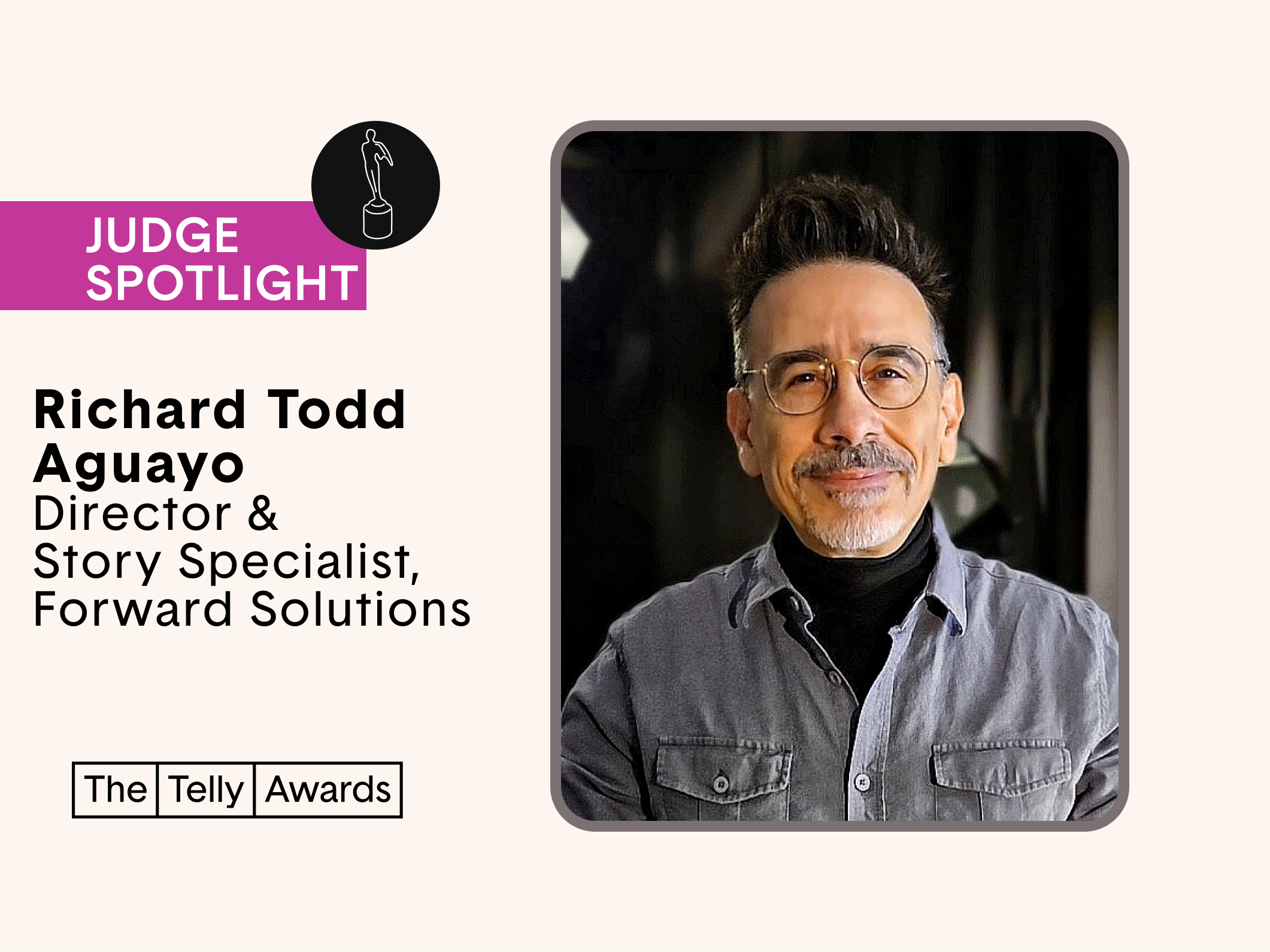
My journey into storytelling wasn’t always straightforward, but it’s always been rich with discovery. The shift came when I stepped off the stage as an actor and picked up the camera.
This shift led me to found rta filmworks and later RazorSharp Creative, where I harnessed the power of story in its many forms.
Throughout my career, whether working with clients on commercial projects, building business communication collateral, or collaborating with creatives, I refined my craft and deepened my understanding of how stories connect us.
Now, as Director and Story Specialist at Forward Solutions, I bring my wealth experience to the table, helping businesses find their voice and communicate effectively.
What excited you about judging for the Telly Awards?
Having the opportunity to reward good work and keep the standards of what I love to do at a level that honors those that put out the good work.
How many years have you been a judge?
1-3 years
What was your first job in the industry? What did it teach you?
I started as an actor and worked in front of the camera for over a decade before jumping behind the lens. On the other side, I started as a grip on a shoot featuring paper towels and toilet paper. And what it taught me was that every aspect of the production team is important, deserves respect, and is a vital part of the creative process.
What project are you most proud to have worked on?
Last year I created a series called “The Ones Behind the ONE” that told the story of a day in the life of our field reps, featuring their philosophies and their ways of working through the world that gave a more personal view of our people.
What’s the most challenging part about your job and/or the industry?
Convincing the stakeholders that telling a story in the B2B space is just as important as in the B2C space because you’re still talking to people and people respond to story.
What do you look for to determine excellence in video?
Narrative excellence, visual excellence, and the ability to combine the two.
How do you unwind from work mode?
I never really think of it as work mode. I tell people that what I do is my passion and my profession, in that order. So there’s really not too much I need to wind down from. Likewise, when I’m not making stories I tend to be watching them. So, movies, TV shows, things like that are what bring my mind back to being more malleable and calm.
Do you have any specific practices you lean on to fuel your creativity?
Singing in the shower.
When did you know that this career is what you wanted to do?
I started acting on a whim in high school, that led me to New York in the early 2000s, where I picked up a camera to try to tell my story as an actor (following in the Goodwill Hunting school of thought) ..once I stepped behind the lens I was fueled by the creative possibilities that then launched my imagination into the stratosphere. And I’ve been doing it ever since.
What are your current roles and responsibilities and what do you love most about your job?
I created the video production division of my current from scratch and exerting operational influence, winning awards and fostering growth. I exercise creative control and oversight across the spectrum of brand-centric video projects within established frameworks, spanning the entire portfolio of diverse divisions and products. I love the creative process and being able to translate a vision into a compelling story.
What initiatives or projects are you working on now that excite you?
I’m creating a mini documentary series featuring key players within my organization to help our customers understand how every piece of the puzzle comes together to produce a picture of full service excellence.
What inspired you to pursue your career path?
From performing in front of the camera I wanted greater control over how the story is shaped. And that’s when I jumped behind the lens.
In your experience, what is a significant change you are seeing happen in the video, television, and/or film industry, and what insight can you share about how to navigate it?
Two words: Artificial Intelligence. And the only way to navigate it is to embrace it and do your best to control how it’s used. Just because you can create a pretty picture doesn’t mean you can make that picture mean something. Story is what gives pictures meaning, not the tool that creates the picture.