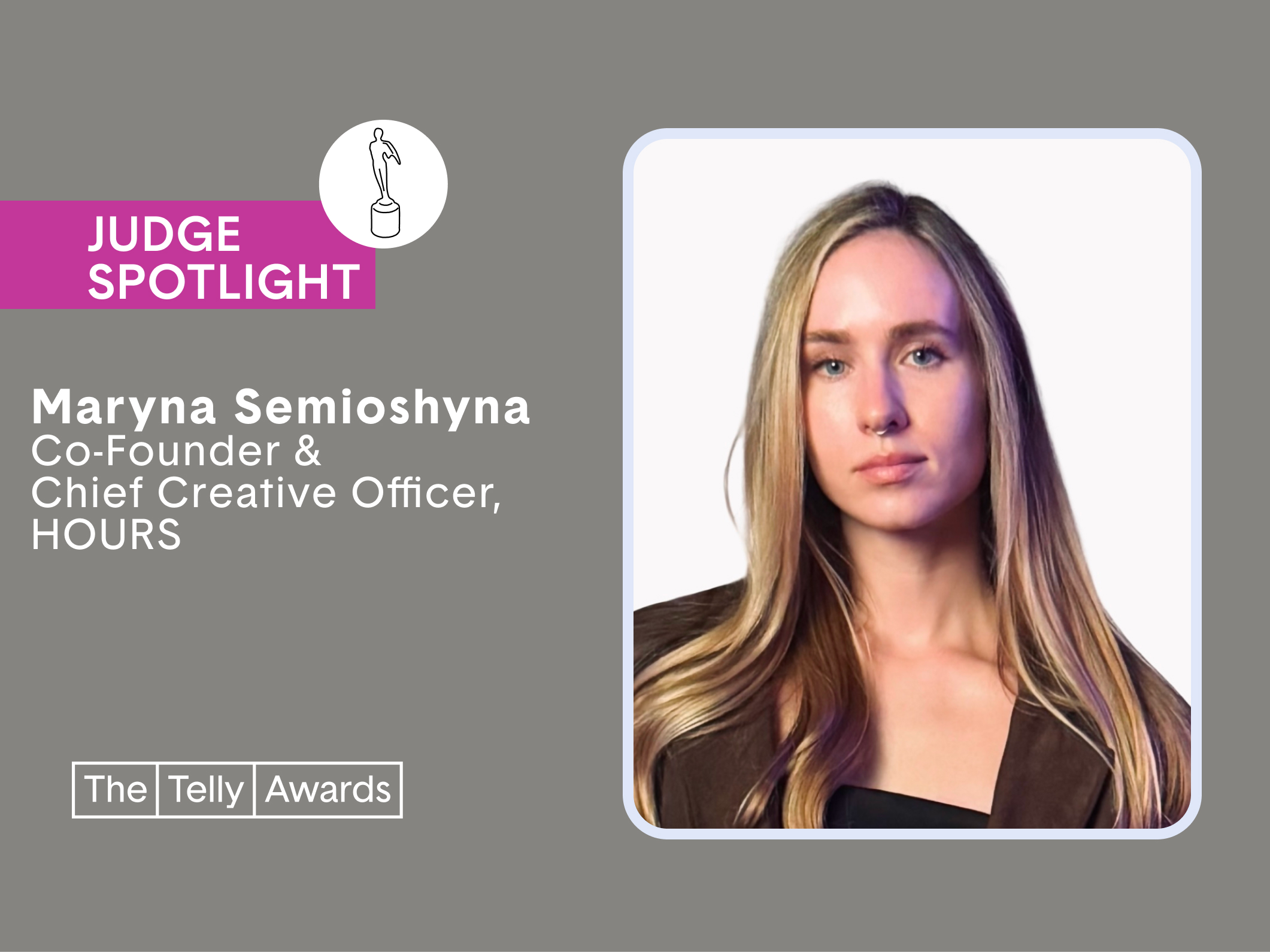
I’m the Co-Founder and Chief Creative Officer of HOURS, a creative studio focused on building high-impact marketing game activations on the Roblox platform.
At Hours, we partner with global beauty, fashion, retail, sports, and lifestyle brands such as Lancôme, Givenchy, adidas, Venmo, Barbie, Mondelez to design immersive, playable worlds that feel native to Roblox culture while delivering real brand and engagement outcomes. My work sits at the intersection of game design, interactive storytelling, and brand strategy – turning campaigns into experiences designed to drive meaningful engagement and measurable results.
My role spans creative direction, product vision, and execution – balancing authentic IP representation and visual identity with the translation of brand narratives into interactive systems. I’ve spent my career building scalable creative frameworks that help brands enter emerging platforms with authenticity, speed, and measurable impact.
How many years have you been a judge?
This is my first year!
What excited you about judging for the Telly Awards?
What excites me most about judging for the Telly Awards is the opportunity to engage with a wide range of creative work across formats and disciplines. I’m especially drawn to how storytelling is evolving—particularly at the intersection of content, technology, and audience engagement—and I value the chance to recognize work that thoughtfully pushes those boundaries forward.
What was your first job in the industry? What did it teach you?
My first job in the industry was as a 3D Design Lead at Polycount, Creative Design Studio specializing in the creation of Immersive 3D Experiences & Games. It taught me to approach design in new and innovative ways—thinking beyond traditional formats and focusing on immersive, interactive experiences.
What project are you most proud to have worked on?
The project I’m most proud of is “LANCÔME IDÔLE HOUSE” on the Roblox platform. It was a first-of-its-kind experience that was built based on the “Playable” product that I led on the creative development side, designed as a four-week campaign framework for brands to introduce their IP on Roblox.
The experience was built as a gamified digital twin of the brand’s real-world IDÔLE launch—a confident, modern, rockstar-inspired space where beauty, music, and self-expression come together. Rather than creating a traditional game, we reimagined Roblox as a premium showroom disguised as play, allowing users to engage with the brand in a more immersive and meaningful way.
What’s the most challenging part about your job and/or the industry?
One of the most challenging parts of the job is navigating permissions and brand guidelines when working with branded content. There are often restrictions on how assets can be used across different platforms, which can limit flexibility.
The challenge—and opportunity—is finding ways to stay true to those guidelines while still creating work that feels fresh, engaging, and platform-appropriate.
What do you look for to determine excellence in video?
I believe great video content starts with a clear idea and strong execution. I look for work where everything feels intentional—how the story is structured, how it’s paced, and how the visuals support the message.
I also pay close attention to how the piece guides the audience. Does it capture attention quickly? Does it create momentum and hold it through to the end? Great video content feels easy to watch, but that usually comes from very deliberate creative choices.
Ultimately, excellence is when concept, craft, and audience experience all align—when the work is not only well-made, but designed to truly connect and stay with you.
What are your current roles and responsibilities and what do you love most about your job?
My role focuses on creative direction and execution—translating brand IP into compelling, authentic storytelling experiences. I work closely across concept, design, and production to ensure the creative vision is both strategically aligned and effectively brought to life.
A big part of my role is making sure the brand feels native to the experience—not just placed into it. I focus on building systems where the brand becomes part of the mechanic, the environment, and the overall player journey.
What I enjoy most is extending a brand’s presence into immersive gameplay and introducing it to new audiences—especially younger, particularly Gen Z. It’s exciting to see how storytelling evolves when it becomes interactive, and how audiences engage more deeply when they actively participate. Creating those moments of connection—where a brand feels both authentic and culturally relevant—is what I find most rewarding.
What initiatives or projects are you working on now that excite you?
Over the past year, I’ve had the opportunity to work with global brands including Lancôme, Givenchy, adidas, Venmo, Barbie, and Mondelēz—developing immersive marketing game activations on the Roblox platform.
The project I’m most excited about right now is the “adidas x Superstar” experience on the Roblox platform, which I creatively designed and led. It launched last month and is currently live. Built around the latest adidas Originals Superstar campaign, the work extends a legacy that goes beyond footwear—rooted in basketball, embraced by streetwear, and continuously redefined across generations.
What made this project especially exciting was translating that narrative into an interactive experience—bringing the campaign into a virtual world and introducing it to a Gen Z audience.
Do you have any specific practices you lean on to spark creativity?
I find inspiration everywhere—especially in the people I meet and the work they create. Learning from strong examples and new perspectives continually pushes me to think differently and grow creatively. I also draw inspiration from nature—long walks help me reset, gain clarity, and create space for new ideas to emerge.
What inspired you to pursue your career path?
Art became part of my life very early—I started attending art school at the age of 10, and that experience shaped my path in a profound way. It taught me how to see and understand the world through creativity—how to observe, interpret, and express ideas visually, while developing a strong sense of detail, composition, and emotion.
That foundation led me to pursue a formal education in Fine Arts, deepening my understanding of space, storytelling, and visual language. Over time, it naturally evolved into my career, guiding me toward work that blends art, design, and immersive experiences.
Even today, that early Art influence remains at the core of everything I do. It shapes how I think about creativity—not just as something visual, but as a way to design experiences that feel intentional, engaging, and meaningful.
In your experience, what is a significant change you are seeing happen in the video, television, and/or film industry, and what insight can you share about how to navigate it?
One of the most significant changes I’m seeing is the rapid evolution of new technologies, particularly AI. It’s transforming the creative landscape—opening the door for more creators, raising the standard of quality, and accelerating production in ways we haven’t seen before.
At the same time, these technologies are expanding the boundaries of video, television, and film into more immersive and interactive spaces. Storytelling is no longer limited to what we watch—it’s becoming something we experience, navigate, and participate in.
To navigate this shift, it’s important to stay curious and adaptable. Embracing AI as part of your daily workflow can enhance productivity and free up more space for creative thinking. The opportunity isn’t in replacing creativity, but in amplifying it—using these tools to explore ideas faster, push concepts further, and ultimately create more meaningful and engaging work.