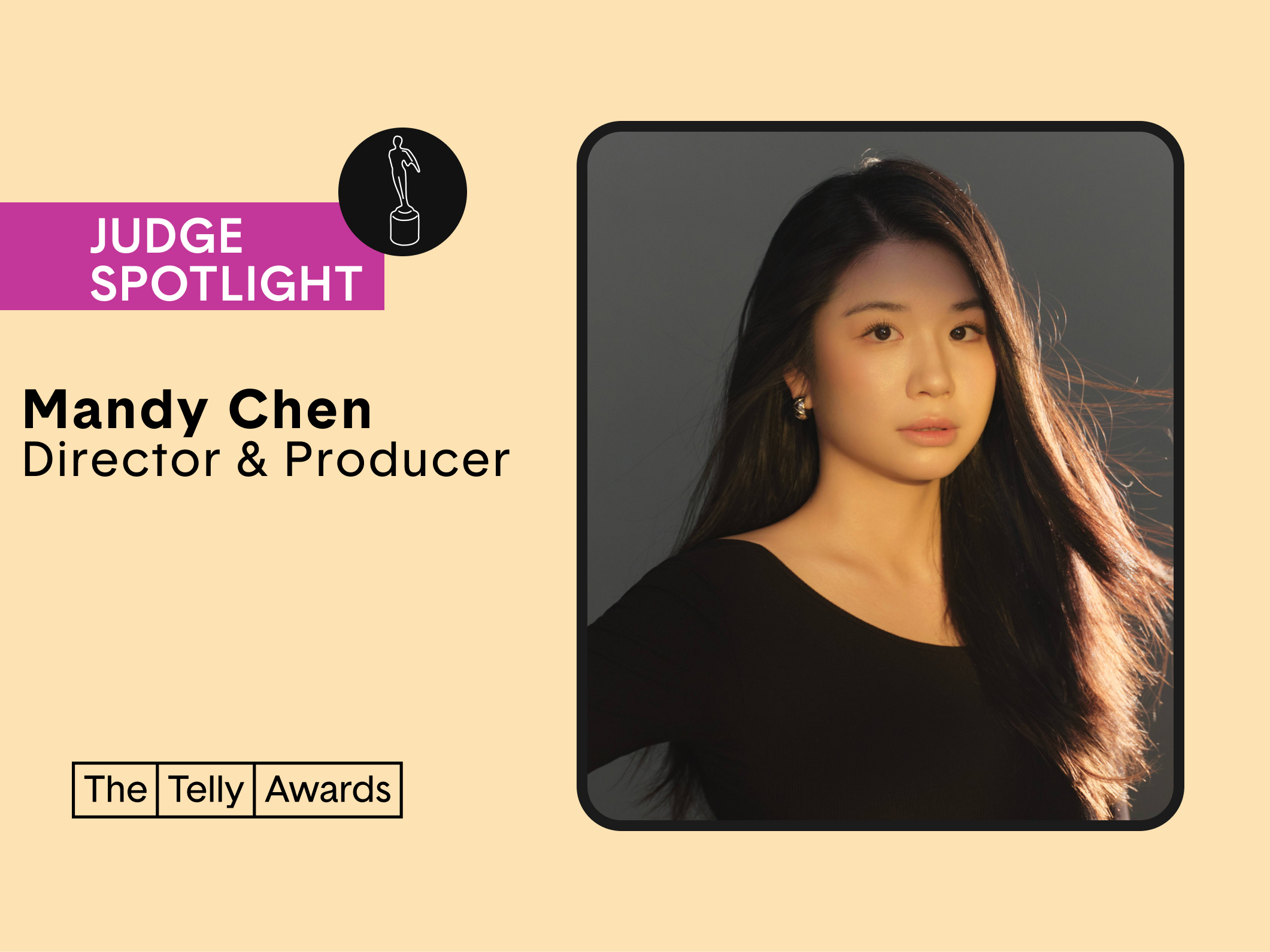
Mandy(Miaomiao) Chen is a director and producer from China based in Atlanta. Mandy is good at capturing the details of life and human emotions and aims to make the film relatable and impactful, providing viewers with a meaningful reflection on their own experiences. She directed and produced several films, including narrative films, commercials, and music videos. Her films have also won the WorldFest-Houston International Film Festival, San Diego International Film Festival, BronzeLens Film Festival, The Telly Awards, Film Invasion Los Angeles, Silicon Beach Film Festival, Latitude Film Award, Robinson Film Awards, New York Cinematography Awards, New York International CINEVERSE Film Festival.
How many years have you been a judge?
This is my first year!
What excited you about judging for the Telly Awards?
I’m excited about the opportunity to see a wide range of creative work from different storytellers and production teams. It’s always inspiring to discover new ideas, unique perspectives, and innovative approaches to visual storytelling.
What was your first job in the industry? What did it teach you?
My first job in the industry was working as a producer on a narrative web series. My responsibilities included budgeting, scheduling, hiring crew, coordinating different departments, and solving problems on set to keep the production running smoothly. That experience taught me how closely commercial projects are tied to budget considerations, which can be very different from indie productions. It was also my first time working with a team where many people were collaborating together for the first time, and everyone brought their own ideas and perspectives. Balancing those creative voices, along with feedback and notes from clients, taught me a lot about communication, collaboration, and navigating the practical side of filmmaking.
What project are you most proud to have worked on?
One project I’m especially proud of is a short film I produced called Winter Psalm. The film tells the story of Irene and her relationship with the family that adopted her, exploring themes of identity and belonging. It’s a project that I feel is both emotionally powerful and beautifully executed. The film was honored with a 2025 award from the The Telly Awards and was also recognized by San Diego International Film Festival and Film Invasion Los Angeles. Seeing the film connect with audiences and receive recognition at festivals has been incredibly rewarding.
What’s the most challenging part about your job and/or the industry?
One of the challenges in the industry is that female filmmakers still face barriers when it comes to opportunities and representation. As a woman working as a director and producer, there can sometimes be assumptions or limitations placed on what stories you can tell or what roles you can take on. At the same time, I believe the industry is gradually opening up to more diverse voices, and it’s exciting to see more women bringing their perspectives to the screen.
What do you look for to determine excellence in video?
I look for fresh perspectives, original ideas, and powerful storytelling that can truly move or surprise the audience. At the same time, I pay close attention to production value and how effectively the creative vision is executed on screen.
What are your current roles and responsibilities and what do you love most about your job?
As a judge, my responsibility is to carefully review each submission and evaluate it fairly based on its creativity, storytelling, and overall execution. What I enjoy most is discovering new ideas and perspectives from different creators and seeing how people push the boundaries of visual storytelling.
As a director and producer, my responsibility is to bring the stories and perspectives I see and believe in to life, and to give a voice to the ideas and emotions I want to express through visual storytelling. I’m involved in shaping the creative vision of a project and working closely with the team to translate that vision onto the screen. What I love most about my job is the opportunity to collaborate with talented people and create work that can move audiences, spark new thoughts, or allow them to see something from a different perspective.
What initiatives or projects are you working on now that excite you?
Recently, I directed a feature film in China, which was a very exciting experience for me. It was my first time shooting a film there, and I found the process incredibly interesting. Working in a different production environment and collaborating with a new team brought fresh perspectives and challenges that I really enjoyed. It was a meaningful experience both creatively and personally.
Do you have any specific practices you lean on to spark creativity?
I try to stay curious and observant in everyday life. Many ideas come from small moments, conversations, and the emotions I notice around me, especially when listening to people and their personal stories. I also keep the habit of watching films and reading regularly, often exploring work from different cultures and genres, which helps spark new perspectives and creative inspiration.
What inspired you to pursue your career path?
I’ve always had a strong desire to express myself and tell stories. I’m drawn to the power of film as a visual language that can convey emotions, perspectives, and human experiences in a way that words alone sometimes cannot. The idea of turning personal observations and stories into something that audiences can see and feel is what inspired me to pursue filmmaking as a career.
In your experience, what is a significant change you are seeing happen in the video, television, and/or film industry, and what insight can you share about how to navigate it?
One significant change I’m seeing in the industry is the rapid development of AI and how it is beginning to influence different aspects of filmmaking and content creation. It’s opening up new possibilities in areas like visual production and workflow, but it also raises important questions about creativity, authorship, and storytelling. My perspective is that while technology will continue to evolve, the core of filmmaking still comes from people‘s experience, emotion, and perspective. Learning how to thoughtfully use new tools while protecting authentic storytelling will be key to navigating this shift.