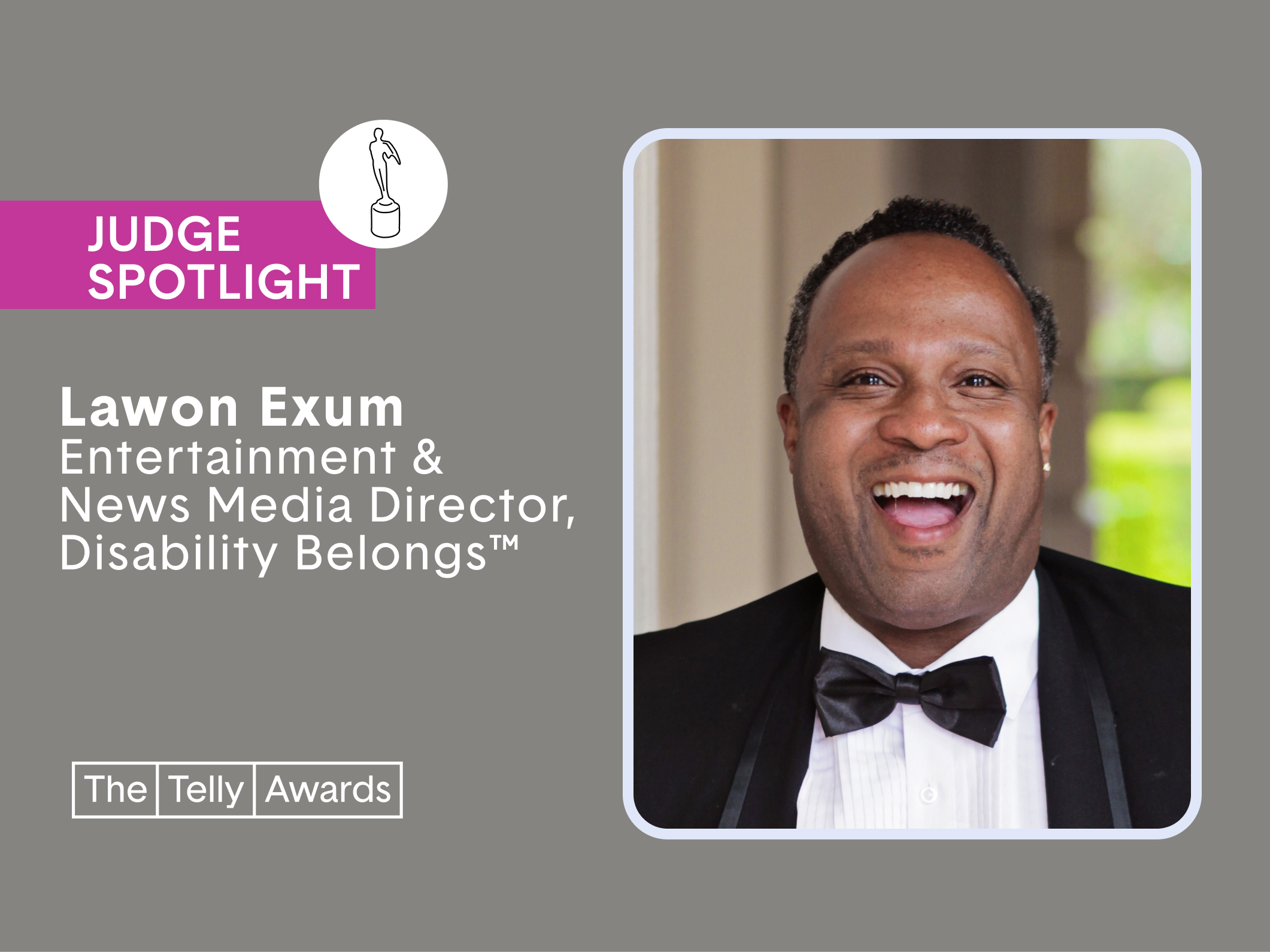
Lawon Exum is an entertainment industry veteran of over 30 years, with a passion to bring change to the entertainment industry, especially around mental health. He currently is the Entertainment and News Media Director at Disability Belongs™ .
How many years have you been a judge?
This is my first year!
What excited you about judging for the Telly Awards?
What excited me most about judging for the Telly Awards was the opportunity to celebrate innovation and creativity in video across all screens. The Tellys have evolved alongside the industry from traditional television to digital, branded content, social media, immersive experiences, and beyond. So being part of a platform that recognizes excellence in this new era of the moving image is incredibly inspiring. I am honored to help highlight work that is pushing the medium forward globally.
What was your first job in the industry? What did it teach you?
My first job in the industry was in A&R (Artists and Repertoire), where I was responsible for discovering, signing, and developing new musical talent. I scouted artists through live shows and online platforms, helped negotiate and finalize contracts, and worked closely with artists on song selection, production, and release strategy. Acting as the key liaison between the artist and the label taught me how to balance creative vision with business strategy, communicate effectively across teams, and recognize potential even in early stages. Most importantly, it taught me the value of artist development not just finding talent, but nurturing it and guiding it toward long-term success.
What project are you most proud to have worked on?
The project I am most proud to have worked on is the Entertainment Lab, because it has a direct and lasting impact on representation, access, and equity in the industry. The Lab elevates disabled writers, directors, and other behind-the-camera creatives by providing community, mentorship, and career development, while also building a pipeline of talent that the industry often overlooks. What makes me especially proud is that the program not only empowers our Fellows, but also educates studios and production companies on the value of hiring disabled professionals. It creates a space where executives and creatives connect in meaningful ways—shifting mindsets, opening doors, and driving real change. Being part of a project that transforms individual careers and influences the broader industry is incredibly rewarding, and it’s one of the clearest examples of why this work matters.
What’s the most challenging part about your job and/or the industry?
One of the most challenging parts of working in the TV/Film industry especially in the space of inclusion and disability representation is that progress often moves slower than the need. While there is growing awareness, there are still outdated perceptions, and a lack of access for disabled professionals both in hiring and storytelling. It requires patience, persistence, and advocacy every step of the way. Additionally, balancing the creative needs of artists with the industry business can sometimes be complex, especially when trying to make space for authentic voices. However, even though it can be difficult, it’s also the reason why the work is so important because every breakthrough leads to more visibility, more opportunity, and a more inclusive industry overall.
What do you look for to determine excellence in video?
Excellence goes beyond high production value. I look for storytelling that is clear, impactful, and emotionally resonant. I pay attention to how well the visuals, audio, and pacing support the message. Originality, intention, and execution matter. Whether it’s a commercial, documentary, or branded piece, I want to see that every creative choice serves a purpose. Innovation in format or platform is also a huge plus.
What are your current roles and responsibilities and what do you love most about your job?
In my current role, I support Entertainment Media programming by promoting authentic, diverse, and inclusive portrayals of people with disabilities on screen and advocating for better hiring practices behind the camera. I help develop and deliver disability inclusion trainings, build relationships with industry leaders. I also support Workforce Development programs like our Entertainment Labs by strategizing pipeline initiatives, assisting with recruitment and alumni relations, and strengthening career pathways for disabled professionals. On the business and partnership side, I help grow our Entertainment Media Consultancy by tracking projects, training team members, expanding partnerships, and supporting fundraising efforts. What I love most about my job is being able to create real change in the industry elevating disabled talent, shaping inclusive storytelling, and helping build opportunities for individuals in the entertainment industry.
What initiatives or projects are you working on now that excite you?
One of the initiatives I’m most excited about right now is our Entertainment Lab, which is dedicated to elevating disabled creatives in the industry. The Lab focuses on building community, creating meaningful networking opportunities, and supporting long-term career advancement for writers, directors, and other behind-the-camera talent with disabilities. We’re actively developing a strong talent pipeline while connecting our Fellows with industry executives who mentor them on both the creative and business sides of the industry. What excites me most is that it’s a two-way impact. Our Fellows gain access, visibility, and guidance, while studios and production companies learn firsthand about the incredible talent, perspectives, and value that disabled professionals bring. It’s not just a program,
it’s a movement that’s opening doors and reshaping the future of inclusion in entertainment.
Do you have any specific practices you lean on to spark creativity?
One of the practices I rely on to spark creativity is surrounding myself with community and real stories. I get inspired by listening to the lived experiences of disabled creatives, whether through conversations, panels, or our Lab Fellows’ journeys. I also love exploring new perspectives watching content outside the mainstream, attending industry events, and keeping an eye on emerging voices who are pushing boundaries. Collaboration is another creative spark for me. Bouncing ideas off others often opens up possibilities I wouldn’t have found alone. Lastly, I give myself space to step back when needed. Which for me is taking quiet time to reflect, journal, or even just observe the world around me. Creativity flows best when I stay curious, connected, and intentional about making room for fresh ideas.
What inspired you to pursue your career path?
What inspired me to pursue this career path was the clear lack of authentic representation and access for disabled talent in the entertainment industry and the belief that storytelling has the power to change culture. I saw firsthand how many brilliant creatives were being overlooked, not because of a lack of skill, but because the industry wasn’t built with them in mind. I wanted to be part of the solution: building pathways, shifting mindsets, and opening doors that had been closed for far too long. I’ve always been passionate about both creativity and advocacy, and this career allows me to merge the two supporting artists, influencing how stories are told, and helping reshape the industry from the inside out. Knowing that this work creates opportunity, visibility, and lasting impact is what continues to inspire me every day.
In your experience, what is a significant change you are seeing happen in the video, television, and/or film industry, and what insight can you share about how to navigate it?
One of the most significant changes I’m seeing in the video, television, and film industry is a growing demand for authentic representation—not just on screen, but behind the camera as well. Audiences are calling out inauthentic portrayals, and studios are starting to recognize that inclusive storytelling is not only the right thing to do, but also good business. However, this shift comes with higher expectations: it’s no longer enough to check a box; people want depth, accuracy, and lived experience in the creative process.
The insight I would share for navigating this change is to approach inclusion as partnership, not performative action. Build relationships with communities, hire talent with lived experience, and allow them to shape the narrative from development to release. From a career perspective, staying adaptable and open to collaboration is key. This new era rewards those who understand culture, not just content. The industry is evolving, and those who embrace authenticity, accessibility, and long-term investment in diverse talent will be the ones who move it forward.