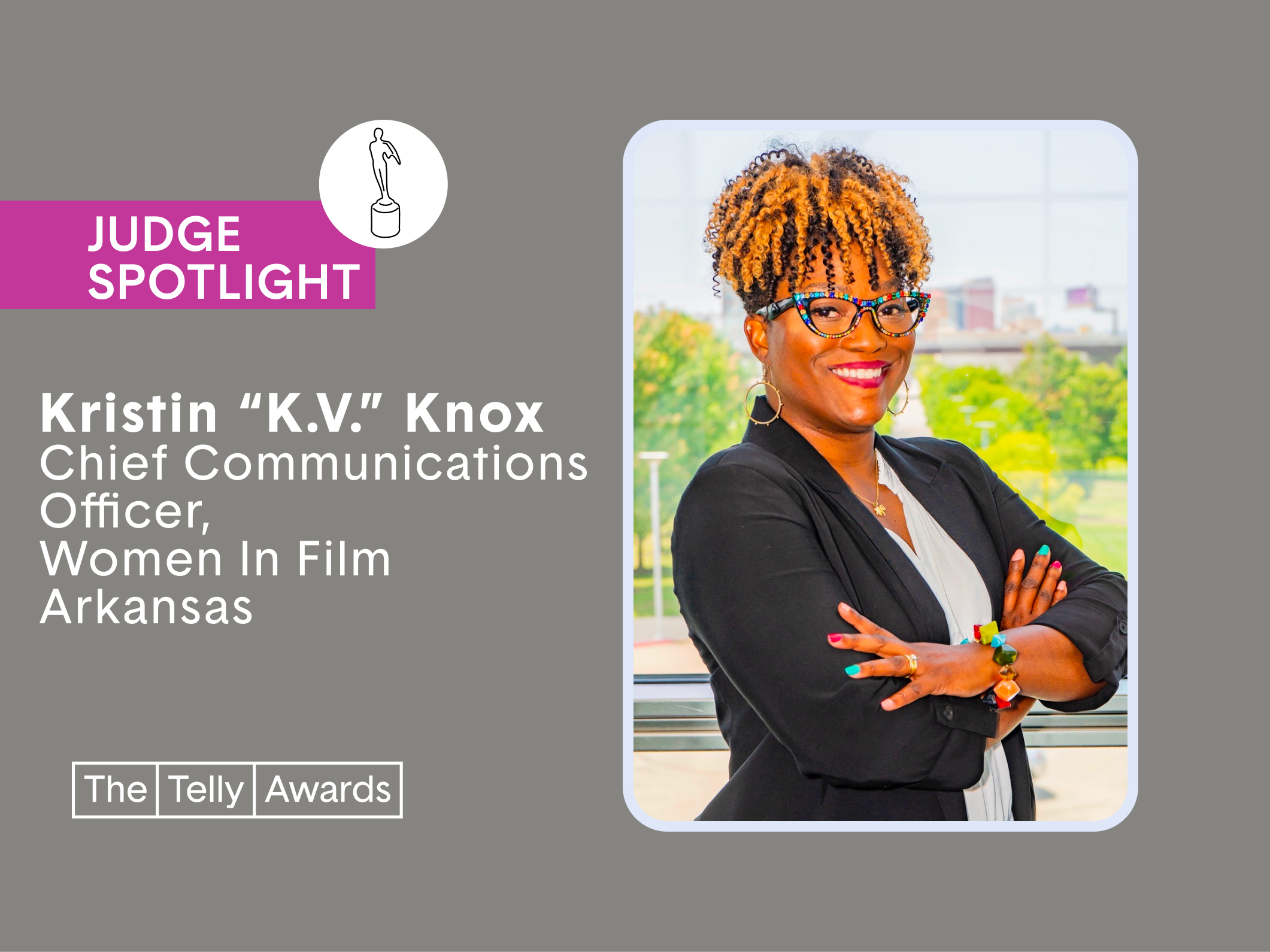
Kristin “K.V.” Knox is the Chief Communications Officer of Knox Media Group, where she helps creatives, entrepreneurs, and organizations amplify their voices and build sustainable visibility. A seasoned media professional and performer, she has over 20 years of experience spanning broadcast journalism, PR, and stage performance. Kristin also serves on the board of Women in Film Arkansas, supporting initiatives that advance equity, representation, and access in media. Her work consistently centers diverse voices and meaningful storytelling that connects culture, community, and purpose.
How many years have you been a judge?
This is my first year!
What excited you about judging for the Telly Awards?
I’m excited about judging for the Telly Awards because it’s an opportunity to celebrate excellence in storytelling and visual communication. I love seeing the creativity, craft, and innovation that content creators bring to life, and it’s inspiring to help recognize work that informs, entertains, and makes an impact across industries and communities.
What was your first job in the industry? What did it teach you?
My first job was as a Production Assistant. It taught me the value of preparation, patience, and adaptability. Every detail matters, and the way you show up in small roles often shapes your growth into leadership. It also showed me that media work is a team effort, success depends on collaboration and respect for every contributor.
What project are you most proud to have worked on?
I’m especially proud of my role as Aunt Mama in the stage production Sugar in Our Wounds. Aunt Mama is a cornerstone of the story, her presence, wisdom, and resilience shape the journey of the other characters and reflect the strength of community and family in the face of hardship. Bringing her to life on stage allowed me to honor those voices, connect deeply with audiences, and showcase the power of storytelling to explore history, identity, and human resilience. It was a transformative experience both personally and professionally.
What’s the most challenging part about your job and/or the industry?
One of the biggest challenges is balancing creative vision with logistical and business realities. There’s always pressure to produce high-quality, engaging content while managing budgets, timelines, and multiple stakeholders. It requires adaptability, strategic thinking, and a commitment to maintaining creative integrity.
What do you look for to determine excellence in video?
Excellence comes from authenticity, creativity, and technical execution. I look for videos that tell a compelling story, connect with the audience emotionally, and show attention to detail in production, everything from cinematography and sound to pacing and editing. It’s the combination of heart, clarity, and craft that makes a piece stand out.
What are your current roles and responsibilities and what do you love most about your job?
At Women in Film Arkansas, I serve on the board, helping advance initiatives that support equity, representation, and opportunity in media and film. As Chief Communications Officer I oversee PR, marketing, and media strategy for members and projects. What I love most is being able to amplify diverse voices, help creatives and entrepreneurs tell their stories, and see the tangible impact of storytelling on communities and organizations.
What initiatives or projects are you working on now that excite you?
Right now, I’m focused on projects that elevate underrepresented voices in media, both through storytelling and strategic communications. I’m also developing initiatives with Women in Film Arkansas to support emerging filmmakers and creatives, helping them gain access to mentorship, resources, and visibility.
Do you have any specific practices you lean on to spark creativity?
I immerse myself in diverse experiences such as listening to stories, attending performances, reading, or exploring new art forms. Collaboration also sparks creativity; brainstorming with other passionate creatives often leads to ideas I couldn’t generate alone. I also make time to reflect and pause, because space and clarity often lead to the best ideas.
What inspired you to pursue your career path?
I was inspired by the power of media to amplify voices and effect change. Seeing journalists, performers, and storytellers influence culture and community showed me that storytelling is a tool for truth, empowerment, and connection. I wanted to be part of that legacy, both in front of the audience and behind the scenes shaping messages that matter.
In your experience, what is a significant change you are seeing happen in the video, television, and/or film industry, and what insight can you share about how to navigate it?
The industry is rapidly democratizing, digital platforms have expanded access for creators, but they’ve also increased competition. To navigate this, focus on authenticity, build a strong personal and professional brand, and leverage storytelling to connect deeply with audiences. Consistency, collaboration, and adaptability are key in this evolving landscape.