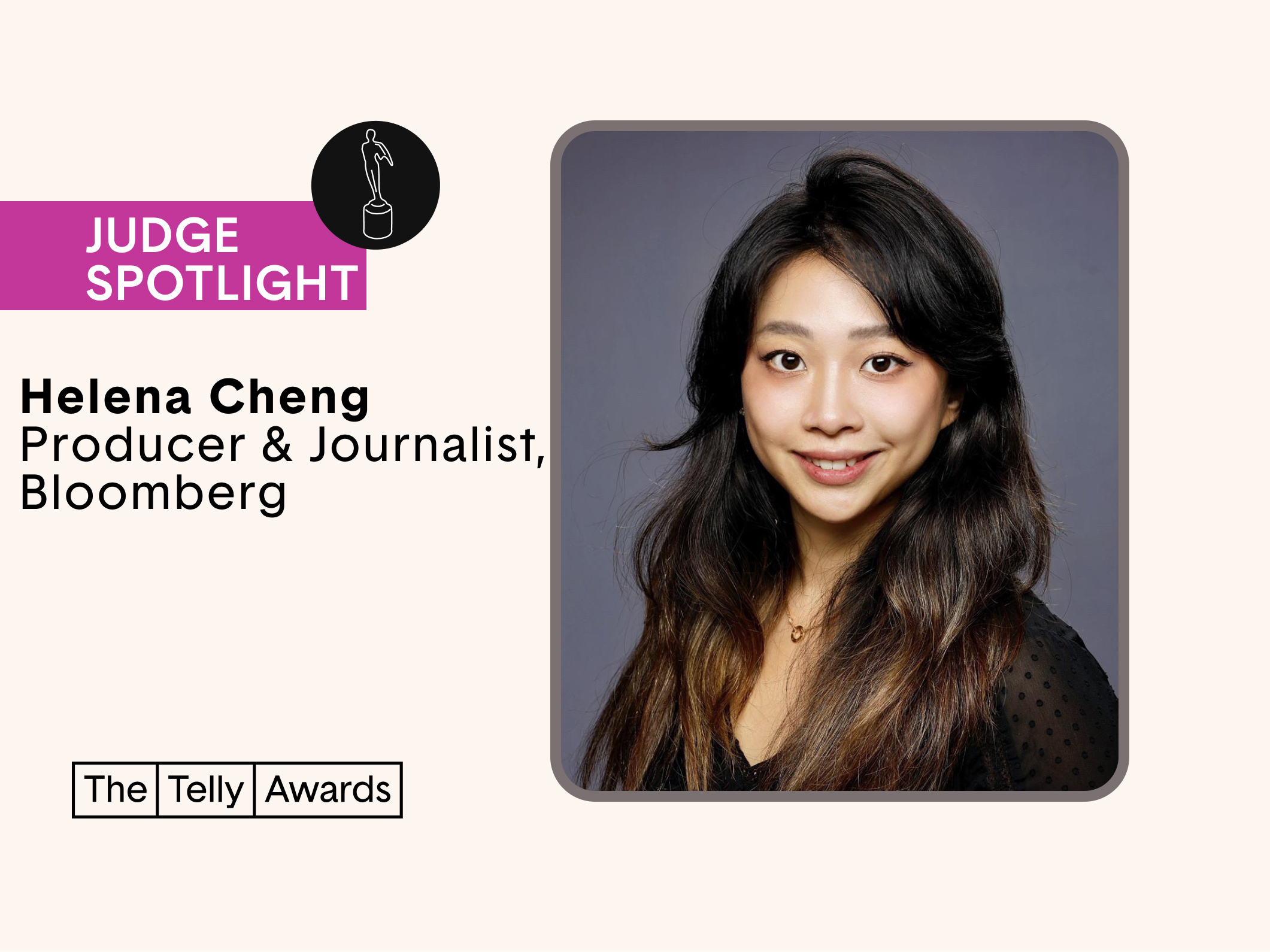
Helena Cheng is currently a financial journalist at Bloomberg News in New York, where she produces and writes daily market news on global technology, equities, crypto and ETF. Previously, she was a news associate at ABC News, editing and publishing digital and broadcast stories for GMA and ABC News Live on cultural news. She was also news associates at Fox News and CNBC before, which gave her abundant experience covering political events and breaking news.
Beyond the newsroom, she serves as Director of Communications on the AAJA NY board, leading outreach efforts and fundraising to support AAPI voices in journalism.
How many years have you been a judge?
1-3 years
What was your first job in the industry? What did it teach you?
My first job in the industry was as an editorial/reporting intern at CNBC. I supported the newsroom across fast-moving shows by helping with research, fact-checking, scripting support, and coordinating elements needed for live segments in real time.
That experience taught me two things that still shape how I work today: speed with accuracy, and clarity over cleverness. When markets move, the window for getting information right and getting it out is tiny, and there’s no room for loose wording or unverified claims. It also taught me how much great television depends on teamwork. The best segments happen when producers, anchors, editors, and control room crews are aligned on the story, the structure, and the visuals. CNBC showed me how disciplined production turns complex financial information into coverage people can actually use.
What project are you most proud to have worked on?
The new show called Bloomberg Crypto in which my production of segment De-Fined is what I am proud of the most.
What’s the most challenging part about your job and/or the industry?
The most challenging part of my job is delivering speed without sacrificing accuracy or clarity. In live, markets-driven television, the story can change in minutes, guests can pivot in real time, and you still have to make sure every line is defensible, every chart is correct, and the segment makes sense to a viewer who hasn’t been tracking the story all day.
Industry-wise, the biggest challenge is attention. Audiences have endless options and shrinking patience, so the temptation is to optimize for clicks, heat, or velocity instead of understanding. The work I’m proudest of is finding a way to make complex topics genuinely accessible and compelling without flattening nuance or chasing noise. It’s a constant negotiation between what’s urgent and what’s important, and doing that well takes strong editorial judgment and discipline.
What are your current roles and responsibilities and what do you love most about your job?
I’m a producer at Bloomberg Television, where I develop and execute daily, market-moving programming across live shows. My role spans pitching and shaping story angles, booking and pre-interviewing guests, writing tight scripts and interview frameworks, coordinating with anchors, control room teams, and editors, and overseeing post-production elements to ensure every segment is accurate, clear, and visually compelling. I’m also deeply involved in transforming complex topics, from macro and markets to tech and crypto, into storytelling that audiences can actually understand in real time.
What I love most is the craft of turning urgency into clarity. Live television forces you to make fast decisions, but the best work still comes from rigorous reporting, clean structure, and strong editorial judgment. I’m happiest when a segment lands because it’s both smart and watchable, when the visuals, writing, pacing, and facts all click, and the audience leaves with something sharper than they came in with.
What initiatives or projects are you working on now that excite you?
Right now I’m focused on building and launching new programming and recurring segments at Bloomberg Television, which is exciting because it’s equal parts editorial strategy and creative execution. I’m working on projects that translate fast-moving markets and emerging themes like crypto, AI, and shifting consumer and tech trends into tight, highly watchable segments with clear storytelling and strong visuals, without dumbing anything down.
What excites me most is the challenge of creating a consistent “language” for these segments, from the structure of the questions to pacing, graphics, and explainers, so viewers can follow complex ideas quickly and confidently. I love the process of taking something noisy and technical and turning it into a segment that feels inevitable: sharp, accessible, and built for how people actually watch news now.
What inspired you to pursue your career path?
I’ve wanted to be a journalist since I was six. Even then, I was drawn to the idea that asking the right questions and telling the story clearly could help people understand the world and make better decisions. As I grew up, that curiosity turned into a real sense of purpose, not just reporting what happened, but explaining why it matters.
What ultimately inspired my path is the mix of rigor and storytelling. I love the chase of getting the facts right under pressure, and I love the craft of shaping complex information into something people can actually absorb. Working in markets and business news made that even more meaningful to me, because the stakes are immediate, financial coverage affects how people feel about their future, and clarity can cut through fear, hype, and misinformation.
In your experience, what is a significant change you are seeing happen in the video, television, and/or film industry, and what insight can you share about how to navigate it?
A significant change I’m seeing is that AI is turning “production” into something closer to “assembly.” The baseline work that used to take a team (transcripts, rough cuts, selects, captions, translations, even draft scripts and headlines) is getting cheaper and faster. That’s great for speed. It’s also dangerous, because it creates the illusion that the thinking part is optional. Spoiler: it’s not.