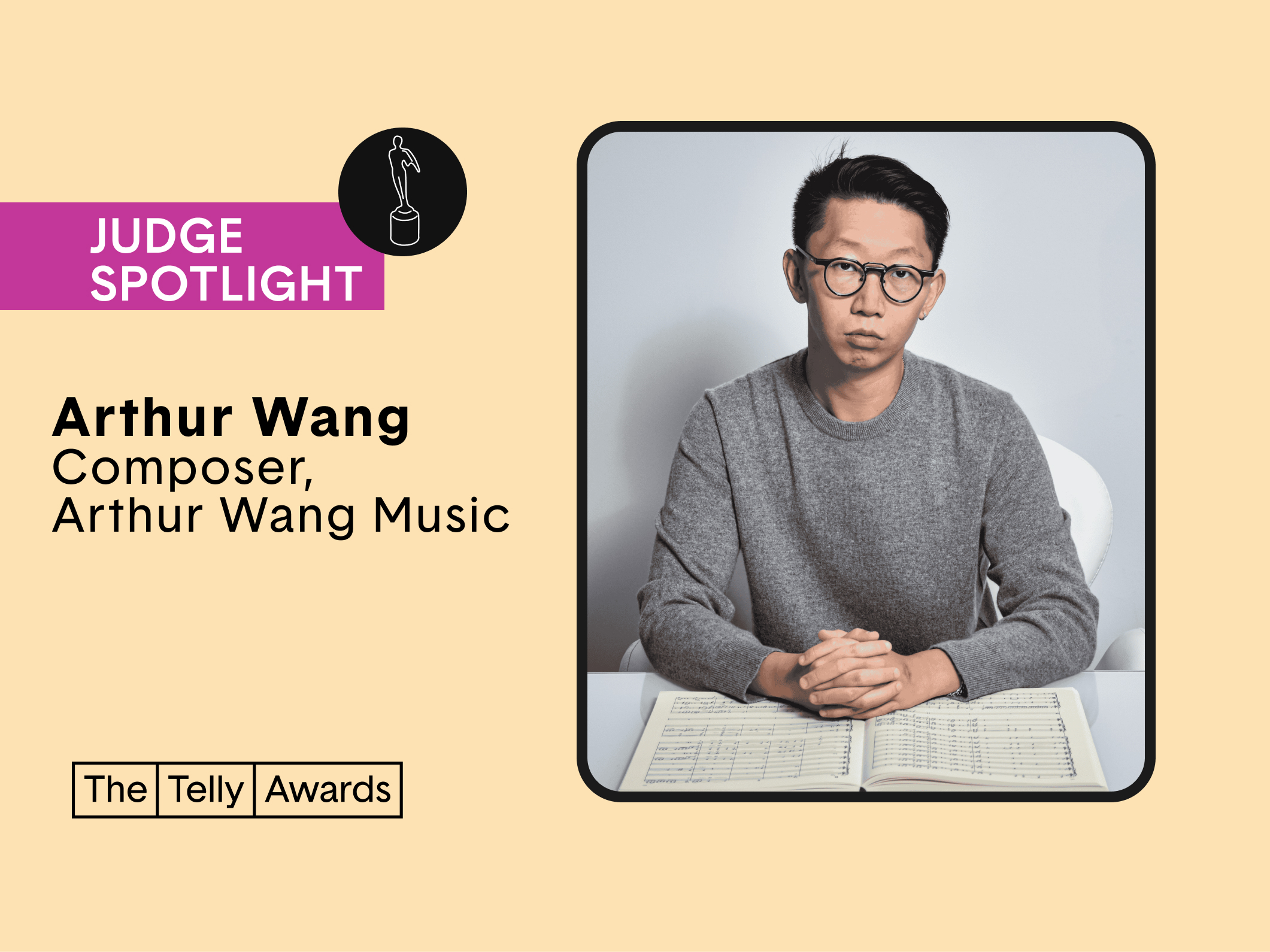
Arthur Wang is a composer, arranger, and music producer whose work spans concert music, film and media scoring, VR/interactive projects, and dance collaborations, shaped by a deep engagement with philosophy, culture, and history. As a contemporary composer, he aims to serve as a musical bridge—integrating diverse cultural traditions and artistic disciplines to foster meaningful dialogue through sound. His music has been performed in the United States and Hong Kong by ensembles and artists including the American Modern Ensemble, Jasper String Quartet, Reverón Trio, Mansfield Symphony Orchestra, and BIODANCE. His honors include First Prize at the Shanghai International Electronic Music Composition Competition and distinctions from ASCAP and the European Recording Orchestra, with recent highlights including the award-winning VR game Zong (Best VR at the Swedish International Film Festival and the New York International Cult Film Festival).
How many years have you been a judge?
This is my first year!
What excited you about judging for the Telly Awards?
Judging for the Telly Awards excites me because it sits right at the intersection of storytelling and craft—where music, sound, editing, and visual language come together to create real emotional impact. As a composer and producer working across film/media, VR/interactive projects, and cross-disciplinary performance, I’m especially drawn to work that takes creative risks while staying clear and intentional in its communication. I’m looking forward to recognizing pieces that are not only technically excellent, but also culturally resonant and imaginative—projects that build genuine connection with an audience and push the medium forward.
What was your first job in the industry? What did it teach you?
My first professional industry job was doing music preparation for an arrangement of “Amazing Grace” for the Towers of Freedom 9/11 Military Monument event, working with Emmy-winning composer Mark Watters. It taught me how high the standard is in the U.S. music industry—everything has to be precise, clearly documented, and delivered on time, because the production chain is tightly connected and one small mistake can affect many people downstream. I also learned the value of professionalism in collaboration: anticipating needs, communicating clearly, and treating every detail—parts, formatting, revisions—as part of the creative product.
What project are you most proud to have worked on?
The project I’m most proud of is composing the score for the award-winning VR game Zong. It’s an immersive interactive experience that demanded a truly cinematic musical arc while also responding to the player’s sense of space, pacing, and emotional discovery inside VR. Writing for Zong pushed me to think beyond linear scoring—building themes, textures, and transitions that feel seamless and alive in a 360° world. The project went on to receive Best VR recognition at the Swedish International Film Festival and the New York International Cult Film Festival, which was deeply meaningful and affirmed the power of music in immersive storytelling.
What’s the most challenging part about your job and/or the industry?
The most challenging part of my job is meeting a high creative standard while staying flexible across very different production realities—film, VR/interactive, concert works, and dance all demand different timelines, workflows, and definitions of “finished.” In this industry, the chain is tight: one change in picture, staging, or technical specs can ripple through music preparation, production, and delivery, so you have to be meticulous with details while still protecting the emotional core of the piece. It can also be challenging to balance depth with speed—creating something distinctive and meaningful under real-world deadlines and revision cycles. But that pressure is also what keeps me sharp: it forces clarity, craftsmanship, and strong communication in every collaboration.
What do you look for to determine excellence in video?
To me, excellence in video starts with clear intention and storytelling: every creative choice should serve the emotional arc and the message. I look for strong rhythm and structure in the edit, distinctive visual language, and performances (or design choices) that feel honest rather than forced. Sound is a major factor—music, dialogue, and sound design should work as one system, shaping pacing, tension, and meaning without calling attention to themselves. Finally, I’m drawn to work with a point of view: pieces that are culturally aware, thoughtfully crafted, and memorable because they communicate something true in a fresh way.
What are your current roles and responsibilities and what do you love most about your job?
I currently work as a composer, arranger, and music producer, developing original music across concert works, film and media scoring, and cross-disciplinary projects such as VR/interactive and dance collaborations. My responsibilities range from concept development and spotting/story planning through composition, orchestration, mockups, recording/production coordination, and final delivery—often tailoring each project to its unique narrative and technical needs. I also mentor emerging composers and support artists through portfolio-building and professional preparation when opportunities arise. What I love most is shaping emotion and meaning through sound—collaborating with creators from different fields and watching a piece of music help a story land in a way that feels immediate, human, and memorable.
What initiatives or projects are you working on now that excite you?
Right now I’m excited to be moving between several projects with very different creative worlds: I’m writing the score for the VR game Zong, developing a new Flute Sonata, and preparing music for an upcoming dance-theatre collaboration with BIODANCE. What energizes me most is switching contexts—from interactive, immersive storytelling to intimate concert writing to movement-driven dance work—and letting each medium push my musical language in a new direction. That variety keeps my ears fresh, challenges my craft, and reminds me why I love creating music: it’s always a new conversation between sound, space, and human experience.
Do you have any specific practices you lean on to spark creativity?
Yes—when I need to spark creativity, I lean on a few practical habits that reliably get me moving. I start by grounding the project in a clear “why”: a single sentence about the emotional goal, then I build a small palette (2–3 motifs, a harmonic color, and a few signature timbres) so I’m not facing infinite choices. I also do quick constraint-based sketches—writing 8–16 bars with one limitation (only rhythm, only texture, or only a two-note cell) to let ideas surface without pressure. When I’m stuck, I switch mediums: improvising at the piano, designing a sound in the DAW, or mapping music to picture/movement beats, because changing the workflow often unlocks a new angle. Finally, I keep a listening-and-noting routine—collecting moments from philosophy, history, and everyday life—so I’m always feeding the next piece with fresh meaning.
What inspired you to pursue your career path?
What first inspired me to pursue this path was the sheer beauty and variety of music I grew up hearing. When I was a kid, my mother played me classic Western pop songs from the 1960s and ’70s, and those melodies and harmonies stayed with me. At the same time, discovering Beethoven’s symphonies opened a door to a world of scale, architecture, and emotional depth, while Brian Eno’s atmospheric soundscapes showed me that music could also be pure space, color, and imagination. That mix—songcraft, symphonic storytelling, and ambient texture—made me realize I didn’t just enjoy music; I wanted to create it, and build my own way of connecting people through sound.
In your experience, what is a significant change you are seeing happen in the video, television, and/or film industry, and what insight can you share about how to navigate it?
In music for film and video today, one big change I feel is that audiences are hearing more personality in scores—styles are blending faster than ever, and the line between “music” and “sound” is thinner. Viewers can jump from a cinematic orchestral moment to a minimal ambient texture or a beat-driven cue in the same project, and it still has to feel emotionally honest. My advice is to stay grounded in story: don’t chase trends first—decide what the scene truly needs, find one clear musical idea that carries the emotion, and let everything else grow from that. When you lead with intention and taste, you can adapt to any style shift and still sound like yourself.