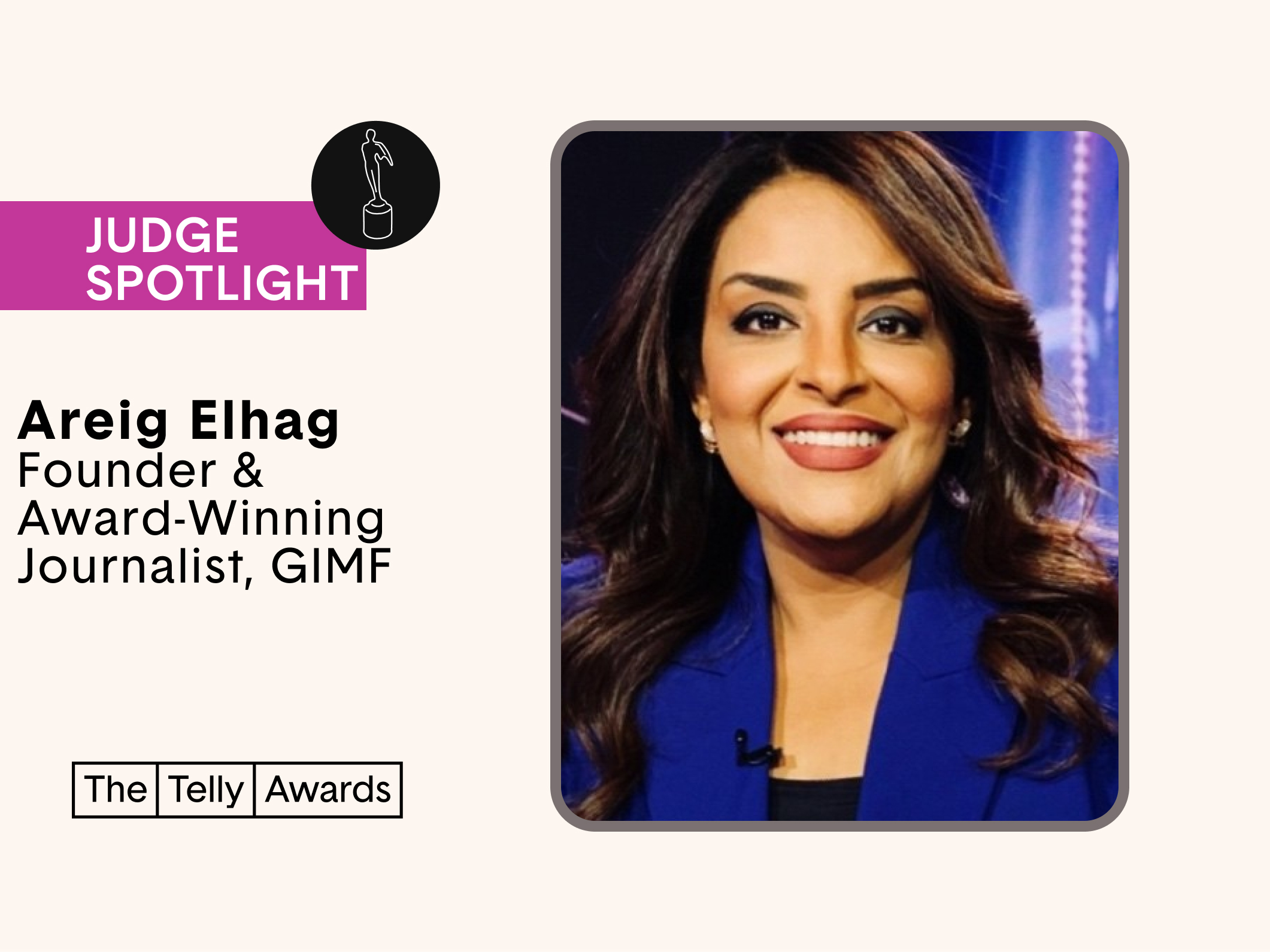
Areig Elhag is an award-winning journalist with more than two decades of experience in journalism, media production, and political analysis. Throughout her career, she has worked across the full spectrum of the profession, from field reporting and newsroom leadership to television production and hosting.
How many years have you been a judge?
This is my first year!
What excited you about judging for the Telly Awards?
It’s exciting to be part of a process that recognizes impactful work and celebrates creators who use media to inform, inspire, and tell meaningful stories.
What was your first job in the industry? What did it teach you?
I began my career in radio, working both as an anchor and a field reporter. Reporting from the field for the first time taught me how to describe events vividly and help audiences visualize what was happening, even without images. I learned how to translate real-life scenes into clear and engaging stories that people could understand and connect with.
Through this experience, I discovered that the human voice carries meaning and emotion, and that how we speak can sometimes tell a story even more powerfully than images themselves.
Over time, I expanded my work into television reporting, collaborating with different TV channels and further developing my storytelling skills across visual media.
What project are you most proud to have worked on?
I collaborate with activists across Africa, particularly in the Horn of Africa, helping them communicate their messages more effectively through the media. I train them on how to write short reports, speak confidently with journalists, and prepare media-ready content.
What’s the most challenging part about your job and/or the industry?
The most challenging part of my work and of the journalism industry more broadly is navigating an environment where journalism and activists increasingly face pressure and attacks simply for doing their work. At the same time, the rapid spread of misinformation and fake news makes maintaining accuracy and public trust more difficult than ever, requiring constant verification and strong editorial responsibility. Another significant challenge is securing sustainable funding for media and journalism initiatives, particularly in regions such as Africa, where resources are limited despite the urgent need to support independent journalists and strengthen credible storytelling. Balancing these challenges while continuing to produce meaningful, trustworthy journalism remains one of the most demanding aspects of the profession today.
What do you look for to determine excellence in video?
What I look for most in determining excellence in video is the strength of the story. High production quality is important, but content always comes first. I focus on whether the story has meaning, what audiences can learn from it, how it benefits viewers, and whether it inspires or leaves a lasting impact. For me, the message and the purpose behind the work are ultimately what define true excellence.
What are your current roles and responsibilities and what do you love most about your job?
I am the founder of the Global Interactions Media Foundation, where I focus on media initiatives and storytelling that connect journalism, policy, and public dialogue. I also work as an editor at The Washington Institute for Near East Policy, contributing to and shaping content in both Arabic and English.
In addition, I write reports, and analytical pieces for different platforms, covering regional and political developments.
What I enjoy most is staying closely connected to the news and helping turn complex events into clear, meaningful narratives that inform and engage audiences.
What initiatives or projects are you working on now that excite you?
One of the projects that excites me most right now is my work through the Global Interactions Media Foundation. I collaborate with activists across Africa, particularly in the Horn of Africa, helping them communicate their messages more effectively through the media. I train them on how to write short reports, speak confidently with journalists, and prepare media-ready content.
I also guide them on practical media skills, including how to conduct interviews, film their work during events, and produce simple video materials that can be shared with news outlets and digital platforms. The goal is to help them tell their own stories and ensure their voices reach wider audiences.
Do you have any specific practices you lean on to spark creativity?
One of the main practices I rely on to spark creativity is talking to people from different perspectives. Hearing diverse experiences helps me see the story more fully and often leads to new ideas and angles.
At the same time, I also value moments of pause. Sometimes I step away from everything, listen to music, and give my mind space to relax. Taking that break helps me return with a clearer perspective and renewed creativity.
What inspired you to pursue your career path?
From a young age, I knew I wanted to become a journalist. As a child, I used to present the morning news at school and was always drawn to following current events and sharing updates with others. I was fascinated by how journalists connected people to what was happening around the world, and I felt that their work was incredibly important.
Even then, I saw journalism as one of the most meaningful professionsو a way to inform people, give voice to important stories, and help society better understand itself. That early passion naturally shaped the career path I chose.
In your experience, what is a significant change you are seeing happen in the video, television, and/or film industry, and what insight can you share about how to navigate it?
One of the most significant changes in the video, television, and film industry is the rapid growth of digital content, particularly podcasts and independent platforms. These formats have transformed how stories are created and consumed, allowing audiences to engage more directly with authentic voices and perspectives.
This shift has taught us that audiences are looking for meaningful, human-centered storytelling, content that reflects real experiences and builds trust. People want stories that feel honest and relatable, rather than distant or overly traditional narratives.
To navigate this change, media professionals need to stay close to their audiences, listen carefully to what people care about, and focus on authenticity and credibility. While technology continues to evolve, the key to success remains the same: telling truthful stories that connect with people in a genuine and impactful way.