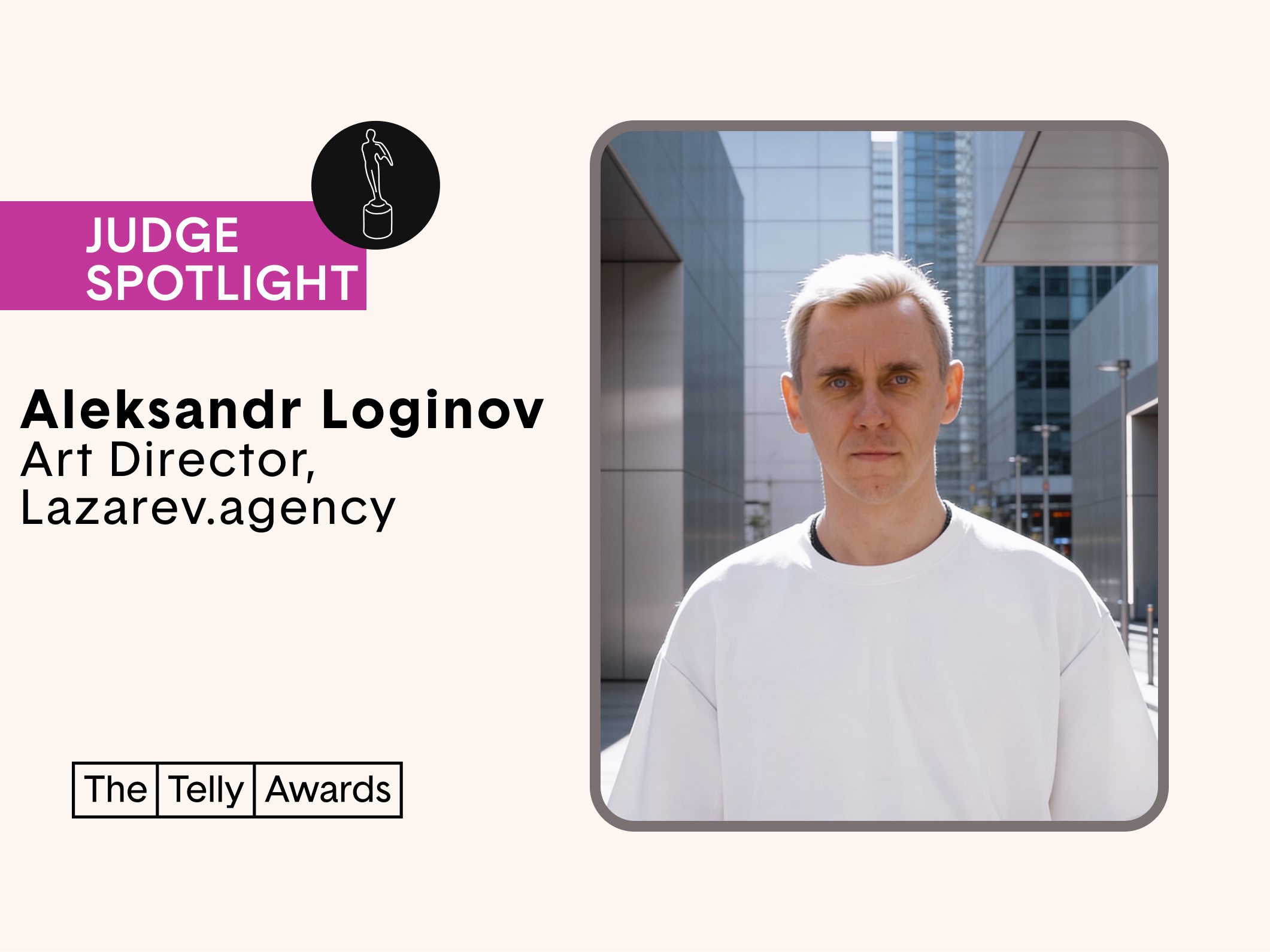
My career began as a video editor at a regional television station, where I created promotional clips for films. This role was highly versatile—I edited, conceptualized, wrote scripts, designed graphics, and managed voiceovers. Editing four to five clips per day required watching hundreds of films to capture key moments, giving me invaluable directing experience and sharpening my skills in video processing. Over time, I expanded my responsibilities to shooting promos and advertisements, effectively becoming a one-person production team. Eventually, I led a small team, gaining my first management experience.
How many years have you been a judge?
This is my first year!
What excited you about judging for the Telly Awards?
Judging the Telly Awards is a unique opportunity to learn from some of the most creative and innovative work in visual media. Having spent my career leading visual storytelling, broadcast design, and AI-powered creative tools, I love seeing how others push boundaries and experiment with new ideas. Evaluating projects from around the world and helping recognize work that sets new standards is both inspiring and energizing.
What was your first job in the industry? What did it teach you?
My first job was as a video editor at a regional television station, creating multiple daily promo clips for films. The role required me to edit, design, write scripts, and even add voiceovers—essentially functioning as a full production unit on my own. Watching hundreds of films and identifying key moments taught me storytelling, visual composition, and efficiency under tight deadlines. Over time, I expanded into shooting promos and ads, eventually leading a small team and gaining my first experience in creative leadership.
What project are you most proud to have worked on?
Above all, I’m especially proud of Prequel — not just as a photo and video editing app. It has become a brand, a driver of aesthetic culture, and a means of self-expression for millions of people around the world.
What’s the most challenging part about your job and/or the industry?
In my view, the hardest part is bringing technology and art together. Today, every designer needs to be at least a bit of a programmer. And programmers with good taste have double the value. If you’re not just creative but also understand the technical side of digital art, you can create truly incredible things.
What do you look for to determine excellence in video?
I look for work that feels purposeful and alive. It’s not just about how polished it is—it’s about whether it connects, surprises, or sticks with you. When a piece makes me pause, feel, or rethink something, I know it’s doing something right.
What are your current roles and responsibilities and what do you love most about your job?
I look for a video that clearly communicates intent, engages viewers, and balances creative vision with technical execution. In my role as Art Director at Lazarev.agency, I define AI product vision and experience strategy, design interaction architectures for agent-driven interfaces, and oversee creative direction, design consistency, and AI behavior across products. I also coordinate with engineering, product, and marketing teams to ensure features are integrated coherently and operate reliably. What I find most rewarding is seeing complex AI workflows translated into intuitive experiences that actually work for real users.
What initiatives or projects are you working on now that excite you?
Lately, I’ve been really inspired by agent-based interfaces. I enjoy working at the intersection of design, user behavior patterns, and LLMs. Personalizing design and UX based on users’ traits and behavior feels especially powerful. The language of design can now adapt and evolve for each individual.
Do you have any specific practices you lean on to spark creativity?
A great way to develop creativity is to travel — a lot. Explore new places, people, cultures, and ways of life, and constantly immerse yourself in fresh visual experiences. It doesn’t have to be expensive — sometimes a short road trip or a hike with friends can spark incredible ideas. I believe the best ideas are always inspired by real life.
What inspired you to pursue your career path?
I’ve always wanted not just to create, but to give people tools to bring their own ideas to life — to make creativity accessible and help everyone express themselves more easily. That’s why the idea of building a creative product felt so natural to me: to embed my own visual vision into it. Through our users, my creative work reaches the world — I’m leaving my own mark on global culture.
In your experience, what is a significant change you are seeing happen in the video, television, and/or film industry, and what insight can you share about how to navigate it?
Of course, AI is having a massive impact right now. I won’t say anything groundbreaking here — if you want to stay relevant, you need to embrace it. As obvious as it may sound, it fully reflects reality: AI won’t replace designers, but designers who use AI will replace those focused on routine work. It takes away a lot of repetitive cognitive load, freeing up time for pure creativity. Generalist designers are experiencing a renaissance — what used to be seen as jack-of-all-trades can now, with the help of AI, replace entire production workflows.