

This piece was produced in partnership with In Creative Company, an in depth educational interview series focusing on the craft and creative processes behind storytelling in the entertainment industry.
Moderated by Jim Halterman, listen to her podcast with actor Stephen Root.
Actor Stephen Root reflects on landing the emotional core of Apple TV+’s hit comedy-horror drama, why the show’s tone “gelled” quickly, and how he approaches roles from scripts to rehearsal.
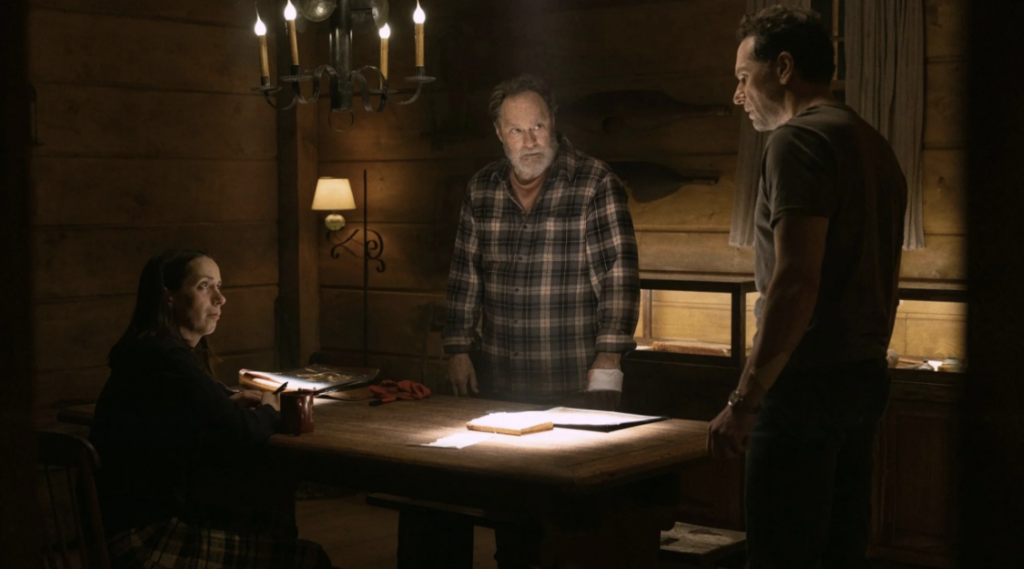
In our recent conversation with entertainment journalist Jim Halterman, Emmy-nominated actor Stephen Root looked back at Apple TV+’s breakout early-year series Widow’s Bay. Root, who earned recognition for Outstanding Supporting Actor in a Comedy Series, credited the show’s momentum to its “tight and beautiful scripts” along with a cast and creative team aligned from the very beginning. “It wasn’t a surprise for me that Widow’s Bay got nominated,” Root said. “It’s so well written.”
Root described the early production as uniquely cohesive: not just strong writing, but a cast “on the same page tonally.” He said that by early table reads, the ensemble already felt connected. “We gelled immediately, right at the table read, the first table read. Pretty much everybody was there.”
When Halterman asked how he approaches a series that moves fluidly between genres, Root attributed the successful blend to character and tone rather than punchlines. “Comedy comes through character, not through written jokes.” Root also mentioned that the director kept humor dialed down over time, helping the series stay grounded in realism even when it becomes strange or frightening.
Root suggested that the most important emotional engine of Widow’s Bay is the changing relationship between his character, Wick, and Tom Loftus, played by Matthew Rhys. He described Wick as someone who has studied the island and can sense what’s happening “now,” not “300 years from now.” Tom, meanwhile, wants to help, yet resists what Wick already believes will unfold. Root summarized the arc as a progression from conflict to alignment: “The point where he finally said, ‘okay, ring the bell,’ then we were on the same page.”
At one point in the interview, Root addressed a technique common among actors: building extensive personal histories for a character. In his approach, he tries not to. He wants the performance to remain surprising when the story reveals itself. “I don’t do that,” he said. “I want to trust the writer… if backstory’s going to come out, let’s let it come out organically.” He said he asks questions when needed but tries not to “play the end of the play.”
Looking ahead, Root’s hopes for Season 2 include an earlier production start and the chance to explore more of the characters and their communities. He said he expects the writers’ room to be operating with momentum and that the show could secure outlines and multiple scripts by December, giving the team a chance to begin shooting sooner than last time. “It is exciting to not know,” Root said. Season 2, he said, should deepen the relationships, broaden the island’s world, and keep viewers coming back for what happens next. As Widow’s Bay continues to build an audience, Root’s comments underscore why the series resonates: a dramatic imagination disciplined by precise writing, performances grounded in “plain truth,” and a tone that finds room for laughter.


