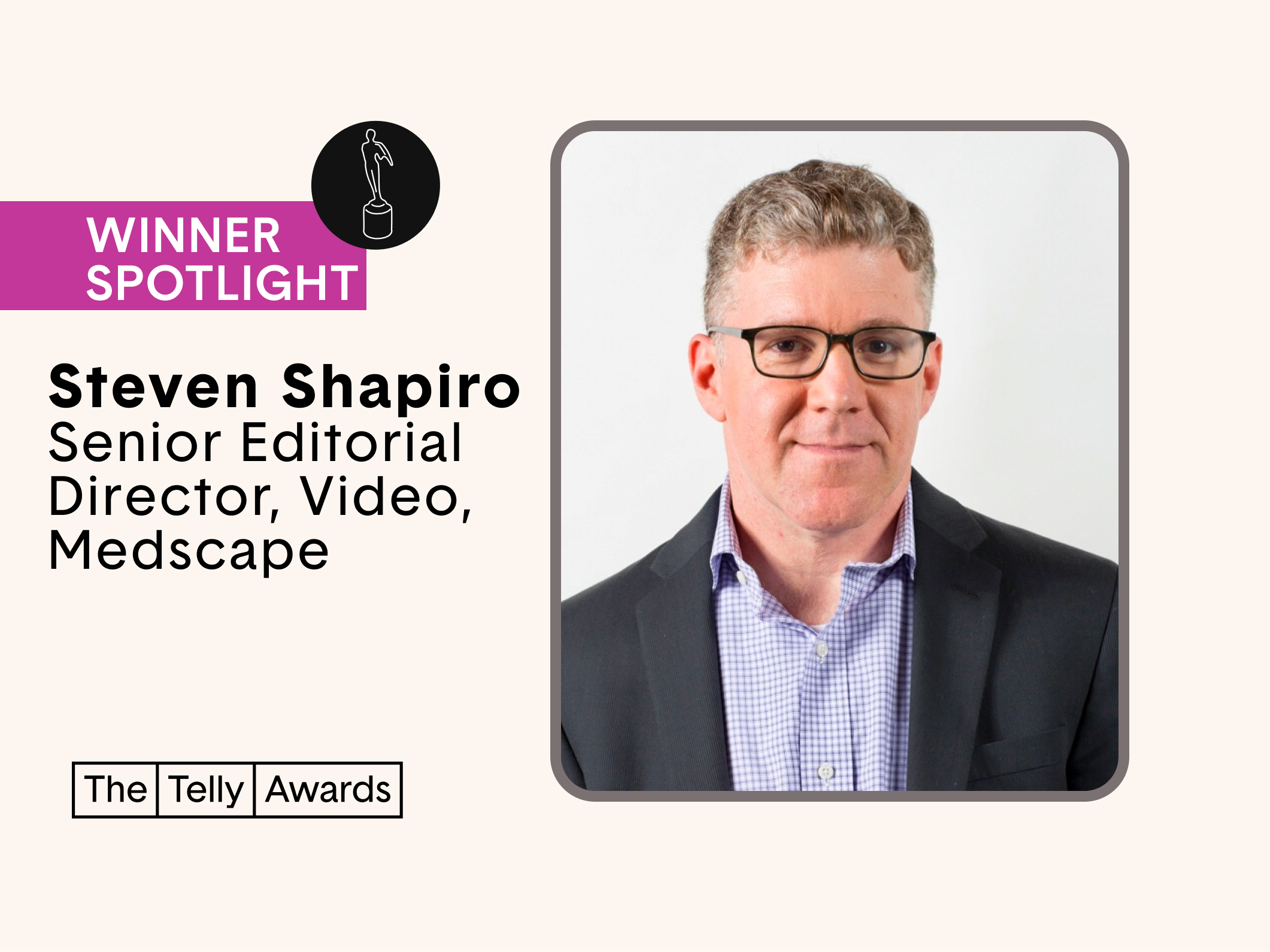
Tell us a bit about your organization and what your specialty is in the film and video space.
For 30 years, Medscape has been grounded in trust, credibility, and clinical excellence, providing physicians and healthcare professionals with accurate, evidence-based information that supports clinical practice and professional growth. Medscape’s unparalleled reach, reliability, and innovation serves millions of clinicians worldwide with physician-led, peer-reviewed content that reflects the latest standards of care. Through our extensive video programs, we showcase the expertise of world-renowned clinicians and researchers, offering practicing physicians and healthcare professionals valuable insights and clinical perspectives across a range of specialties.
What is your organization’s ethos and how does it set you apart from industry competitors?
Medscape’s mission is to empower healthcare professionals with cutting-edge tools and trusted information, leveraging AI and digital innovation to enhance clinical decision-making and support lifelong professional growth.
Medscape distinguishes itself by offering a free, fully integrated platform that brings together clinical reference tools, real-time medical news, and accredited continuing medical education in one place.
How can people join or learn more about what you do?
Medscape membership is free and gives you unlimited access to the entire network of sites and services. Dozens of Medscape’s videos can be seen here.
Tell us about your Telly Award winning piece. What’s the story behind it?
Beyond Cancer: Confronting the Challenges of Survivorship highlights the incredible work being done at the Duke Cancer Institute’s innovative Survivorship and Supportive Care Center. The program was produced in collaboration with DCI and features several patients, as well as the doctors, nurses, and therapists who have built a community that provides continued support and services for survivors and their families throughout the entire survivorship journey.
What are you most proud of about this piece? What was your biggest challenge during production and how did you solve it?
I am most proud that this piece brings attention to the needs of cancer survivors that extend well beyond their final cancer treatment. Many people think the cancer journey ends after the final chemotherapy treatment, but in many cases it’s just the end of one phase and the beginning of the next.
Do you have any advice to other filmmakers based on your career or your team’s approach to work?
My advice to other filmmakers is to listen to your subjects, be flexible and open minded about your process. A filmmaker may head into a project with an idea or an agenda, but often the best stories won’t reveal themselves until the cameras roll.
Can you share a behind the scenes story or fun fact about the making of your piece?
Our featured cancer survivor in this piece was Alexa Baltazar, who was diagnosed with acute lymphoblastic leukemia at age 28. As part of her recovery and survivorship journey, Alexa recently took up golf. We joined her on the golf course to film her playing a round. Besides the fact that she hit the ball twice as far as I could, it was such a joy to see her excelling at her newfound passion and living her best life after everything she has been through.
Tell us about the most memorable response you got from this work.
The most memorable response came from Alexa after she watched the episode for the first time. I could tell from her email that she was very moved by the way her story was told and the attention it brought to the survivorship community. It meant a lot to know I was able to bring her story to life and do it the justice it deserved.
Complete this sentence: ‘Great video storytelling is…’
… powerful and enlightening. It can often resonate more deeply with the viewer than other storytelling platforms. A great video relies on strong visuals and compelling audio to spark emotion in the viewer and can drive action, influence, and understanding.